The Food Lover's Phuket: A 3-Day Eating Plan (Plus What to Take Home)
If food is the point of the trip — not the fuel between beaches, the actual point — Phuket rewards you like few islands on earth. It's a UNESCO Creative City of Gastronomy, it has its own Hokkien-Peranakan food culture you won't find anywhere else in Thailand, and it still feeds its own people first, which means the best eating is cheap, early and unpretentious. The trap is trying to eat everything at once. Three full eating days need a shape: one day for the Old Town's deep end, one day for markets and seafood, one day for the beach side and a proper splurge. Here is that shape, meal by meal — with honest budgets, pacing rules that keep day three as good as day one, and a final section on what to pack in your suitcase so the trip keeps feeding you at home.
Before you start: the pacing rules
These matter more than any single restaurant choice.
- Three real meals a day, maximum. Phuket will offer you five. The portions at the good local places are honest, the heat slows you down, and a stomach that gives up on day two is the real enemy. Graze at markets, feast at one sitting per day, keep the third meal light.
- Heat kills the lunch appetite. This is the tropics: by 1 PM your body wants shade and water, not a three-course lunch. Eat the big breakfast, keep midday small or make it a long, slow, shaded lunch (the Rawai plan on day two is built exactly for this), and save the appetite for the cooler evening.
- The 4 PM roti rule. Late afternoon is Phuket's natural snack window — roti with curry or banana and condensed milk, strong sweet tea, maybe a coffee — and it bridges the long gap between a light lunch and a late dinner perfectly. Every day below has a 4 PM move. Don't skip it; it's when the island's food culture is at its most relaxed.
- Southern spicy is not a dare, it's a warning. One fiery dish per meal alongside mild ones, rice always on the table, and you'll enjoy the fire instead of surviving it.
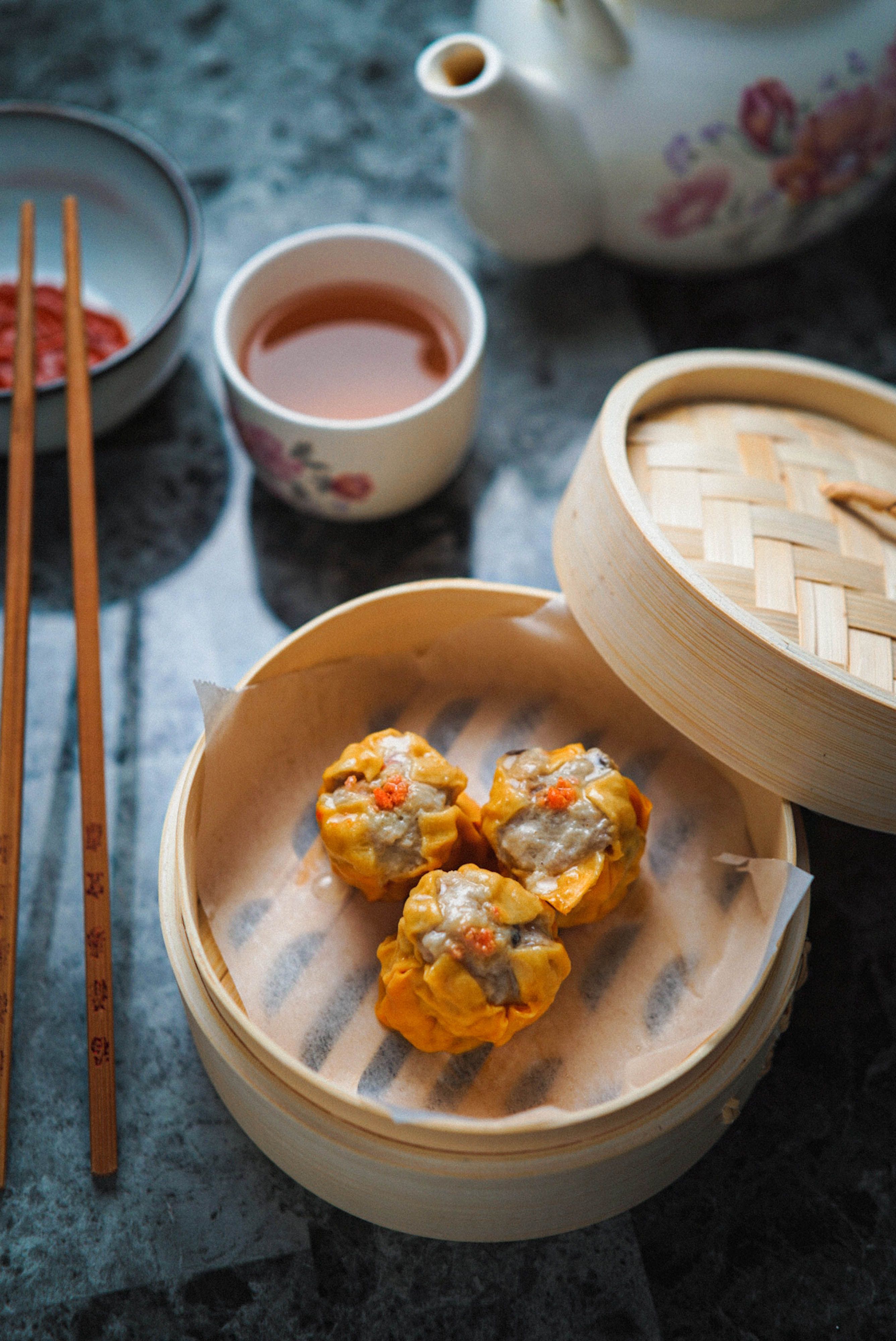
Day 1 — The Old Town deep end
Base yourself in or near Phuket Town today. No beach. Today is about the island's own cuisine, the one that existed long before tourism.
Breakfast (7:30–9 AM): dim sum and kopi, the Phuket way. Phuket starts early and breakfast is a serious meal. The dim sum houses around the Old Town fill with local families from 7 AM: bamboo baskets of steamed dumplings, pork and prawn siu mai, rice rolls and congee, chosen off the trolley or the tray as they come past, washed down with glasses of sweet tea or strong local coffee. Alongside it, the kopitiam culture — old Hokkien coffee shops with marble tables — serves kopi poured the old way, soft eggs, kaya toast, and roti with curry. Pick one style or do both on a small scale: five or six dim sum baskets and a coffee is a complete breakfast for roughly ฿100–200 a person, and you'll be eating shoulder to shoulder with three generations of Phuket Thais. This is the island's living room.
Lunch: mee Hokkien, non-negotiable. The island's signature bowl — thick yellow noodles wok-fried in a rich, dark seafood broth with prawns, squid, pork and a soft egg cracked in at the end — is a lunch dish in Phuket, eaten at plain shophouse counters that may do little else. One bowl, around ฿60–100, eaten where the wok has been seasoning for decades. If there's room, add a plate of o-tao — the fried oyster-and-taro dish found almost nowhere outside Phuket — but remember the pacing rules: today has a dinner coming.
4 PM: roti and tea. Find an Old Town roti shop and do the ritual properly — a crisp roti, a small bowl of curry for tearing and dipping, a glass of sweet pulled tea. It's a snack, a rest and a cultural institution in one sitting, for well under ฿100.
Dinner: the Peranakan table. Phuket Town's evening is where the Baba (Peranakan) cooking lives — the island's Chinese-Malay home cuisine, served in converted shophouses and long-running family restaurants. Order the dishes that define it: moo hong (pork belly braised dark and sweet with garlic and pepper), gaeng pu bai cha plu (crab curry with betel leaves), a fiery southern dish for contrast, and vegetables done the local way. Town dinners of this class run roughly ฿300–600 a person, beer included, and the room will be full of Phuket families celebrating something. End the night with a walk down Thalang Road under the Sino-Portuguese shophouses, lit up and quiet after the day crowds go.
Day 1 budget band: backpacker pace (dim sum, noodle lunch, market-side dinner in Town) about ฿400–600; mid-range, as written, ฿700–1,100; splurge version (add a top-end Town tasting room instead of the family dinner) ฿2,500+.

Day 2 — Market mode
Today you shop like a cook and eat like a local, from the morning market to the night market.
Breakfast: the fresh market graze. Get to a morning fresh market by 7:30–8 AM — the downtown market in Phuket Town is the great one — and graze the cooked-food edge: khanom jeen (fermented rice noodles with curry ladled over and a table of raw vegetables and herbs to add yourself), grilled pork skewers, sticky rice parcels, fried dough sticks with condensed milk, juice and coffee from the stall with the longest queue. There is no menu and no single bill; you pay stall by stall, a few tens of baht at a time, and a full morning feast costs ฿100–150.
Lunch: Banzaan — buy it downstairs, cook it upstairs. Patong's Banzaan fresh market runs the island's most enjoyable seafood system. Downstairs is a proper wet market: stalls of live and iced prawns, crab, squid, shellfish and reef fish at market prices. You choose your seafood, pay by weight (agree the price per kilo and watch the scales — the rule everywhere in Thailand), then carry it upstairs to the food-court-style cooking stalls, which will prepare it your way — grilled, steamed with lime and chilli, garlic and pepper, in a curry — for a cooking fee of roughly ฿100–150 per kilo. Sit down with rice, a papaya salad and a cold drink and eat seafood at half the beachfront price, an hour out of the water. A serious lunch for two, a kilo of prawns and a fish between you, lands around ฿600–1,000 all in. It's also the day's big meal, and it's eaten in the cool of midday indoors — the heat rule, satisfied.
Late afternoon: the southern curry-rice shop. Back in Phuket Town, find a khao rad gaeng shop — rice with curries from the trays — for the island's real southern cooking at its cheapest: gaeng som, the fiery sour orange curry; kua gling, dry-fried spiced minced pork; something gentle like moo hong alongside. One rice with two curries is ฿50–80 and it is not a snack so much as a statement. Keep it small if you can. Tonight is the night market.
Dinner: the night-market crawl. If today is Sunday, the answer is Lard Yai, the Walking Street on Thalang Road — the whole Old Town closed to traffic, hundreds of stalls, the island out for dinner. Other nights, Naka weekend market or Chillva in Town, or Malin Plaza if you're on the Patong side. However the calendar falls, the method is the same: walk the full market once before buying anything, then graze — grilled seafood skewers, o-tao, satay, coconut pancakes, a papaya salad made to order, and a dessert to close. ฿200–400 a person eats very well. This is dinner as entertainment, and it's the cheapest show in Thailand.
Day 2 budget band: backpacker ฿350–550; mid-range as written ฿800–1,300 (the Banzaan lunch is the splurge of the day); splurge version swaps the night market for nothing — honestly, on market day the graze is the splurge.

Day 3 — Beach balance and one big dinner
Day three goes to the coast — lighter through the day, then the one planned splurge.
Breakfast: the beach-town morning. Ease in. A beach-town morning means a Western-Thai breakfast near the sand — good coffee, eggs, fruit, maybe a proper bakery croissant (Phuket's bakery scene is quietly strong, a legacy of its Chinese and European layers) — or, better, one more local move: jok (rice porridge) or khao tom from the shophouse the locals use, a street back from the beachfront where the prices halve. ฿100–250 either way.
The long lunch: Rawai seafood village. Head south to Rawai Beach, the island's working fishing shore, and do the ritual that food people cross the island for. Along the seafront, fishing families sell the day's catch from stalls at local per-kilo prices — prawns, squid, crab, snapper, shellfish. Buy what looks best, carry it across the road to a restaurant facing the stalls, and they'll cook it your way for the usual ฿100–150 per kilo cooking fee. Grilled prawns, squid with garlic and pepper, a whole snapper steamed with lime, rice, morning glory, cold drinks: a feast for two typically totals ฿800–1,400 and nothing you eat in Phuket will be fresher. Go at midday, eat long in the sea breeze while the boats work in front of you, and let this be the day's centre of gravity.
4 PM: the beach version of the roti rule. A beach café, a coconut shake or an iced coffee, feet up. Today has a big dinner and nobody needs a snack that fights it.
Dinner: the splurge. One night, spend properly. Phuket's top end gives you two good shapes of splurge: a Michelin-listed room — the Guide covers the island, from Bib Gourmand shophouses up to a celebrated sustainable fine-dining restaurant in a top resort that people fly in for — or a beach club dinner on the west coast, grilled seafood and sunset turning into a long evening at Bang Tao or Kamala. Either way, book ahead in high season. A tasting menu at the true top runs from roughly ฿2,000 a head before drinks; a beach-club splurge for two with a bottle lands in the same territory. Order the menu that tells the island's story — local crab, southern herbs, named-farm rice — rather than the dish you could get in any capital city.
Dessert, to close the trip: Phuket's own sweet, o-aew — shaved ice over a jelly made from o-aew seeds and banana, sweet and strange and only found here — is the correct final bite, found in Old Town dessert shops. If you're beach-side, coconut ice cream in the shell, with peanuts and sticky rice, does nearly as well.
Day 3 budget band: backpacker (local breakfast, modest Rawai lunch, skip the splurge for a beach-town Thai dinner) ฿600–900; mid-range as written without the tasting menu ฿1,200–2,000; full splurge ฿3,500–5,000+ for two at dinner alone.

Getting between the food (honestly)
Phuket is a big island and its food map is spread out: Old Town and the east are 30–45 minutes from the west-coast beaches, and Rawai is another 20 minutes south of that. The three days above are grouped geographically on purpose — don't zigzag. Practical options: the blue songthaew buses run cheap daytime routes between Town and the beaches (slow, finished by early evening); Grab works island-wide and is the sane default for dinner trips; tuk-tuks are fine for short hops — agree the price before you get in; and a rented car or a driver for Day 2's market-to-market run pays for itself in saved appetite. If you're based in Patong, Days 1 and 3 mean one return trip each — leave early, come back fed.
What to take home: the edible souvenir guide
The best souvenirs from Phuket are the ones you eat. These travel well, clear customs in most countries (always check your own country's rules — Australia, New Zealand and the US are strict in different directions), and actually get used.
Cashew nuts — Phuket's own. The island grows and processes cashews, and the factory shops sell them in forms you'll never see at home: tom yum flavour, wasabi, sesame, coconut, chilli, garlic — plus the plain roasted ones that ruin supermarket cashews for you forever. Buy at a factory shop in or near Town for the best price and the tasting trays; the same bags cost noticeably more at the airport.
Curry paste kits. Sealed packs and kits of southern curry pastes, gaeng som and massaman bases, and tom yum sets are light, flat and shelf-stable — the highest flavour-per-gram item you can pack. The good ones list their ingredients in English and last for months.
Dried seafood. Dried shrimp, dried squid, shrimp crisps and fish snacks travel fine and keep. Be honest with yourself about shrimp paste (kapi) and dried fish generally, though: they are pungent in a way that perfumes a whole suitcase. If you buy them, they go in double-sealed bags, ideally in their own pouch, and they're for your kitchen, not as gifts for the faint-hearted. Sealed, they're legal in most places; unsealed market scoops are where both smell and customs problems start.
Southern coffee and tea. Phuket and the south grow robusta coffee; bags of strong southern coffee beans or ground coffee from Town's old shops make a genuinely local gift, alongside Thai tea mix for making cha yen at home.
Sweet things. Coconut and palm-sugar sweets, pineapple biscuits and jam (Phuket pineapple is famously sweet), and sesame-cashew brittle all survive a flight in hand luggage and arrive ready to share.
What NOT to attempt. Fresh durian is banned on planes and in most hotels for a reason — the dried and freeze-dried versions are the travel form, and honestly they're good. Fresh fruit generally runs into plant-quarantine rules in many countries; eat the mangosteen here. Fresh curry, anything in unsealed liquid, and market ice-packed seafood belong in Phuket, not in your baggage.
Where to buy: factory shops and Town provision shops for cashews, pastes and coffee (best prices, tasting before you buy); the weekend markets for sweets and snacks; the airport only for what you forgot — the same items carry a clear premium there. Buy on Day 2's market runs rather than in a last-day panic, and leave suitcase room. You'll need it.


Three days like this — an Old Town breakfast eaten with the island's families, seafood you chose yourself and watched being cooked, one white-tablecloth night, and a suitcase that smells faintly of coffee and cashews — is the Phuket trip people quietly extend their holidays for. Eat where the island eats, pace yourself like a local, and keep the rice coming.
Planning the rest of the trip around the food? PhuketLive.com has the beaches, boating, golf and nightlife guides — and if you're basing yourself in Patong for the eating, booking direct keeps more of your budget for the restaurants.


Comments
Post a Comment