Seafood in Phuket: How to Order It, Where Locals Buy It, and What It Should Cost
Seafood is the best meal in Phuket and the easiest one to overpay for. Both are true because seafood here works on a system most visitors never get explained: almost everything is sold by weight, prices move with the season and the weather, and the gap between the local price and the tourist price can be double — for the exact same prawns, off the exact same boat. The good news is that the system isn't a conspiracy. Once you know the habits — how fish is priced, where the island buys its catch, which "lobster" is worth your money and which is mostly shell and hype — you can eat magnificently and know the bill is fair before the food hits the table.

How seafood is sold: weight, tanks and cooking fees
Forget per-dish pricing as you know it from a Western menu. In Phuket's seafood world, three mechanics run everything.
Everything is priced by weight. Fish, prawns, crab and shellfish are quoted per kilo — or, and this is the first thing to check, per 100 grams. A sign that says "150" for prawns might mean ฿150 per 100g, which is ฿1,500 a kilo: a respectable price for big tiger prawns, but a very different number from the one your brain just read. Neither quoting style is dishonest on its own — per-100g pricing is common at live-seafood restaurants — but you must know which one is in front of you. Ask: "per kilo or per hundred grams?" Every time, before anything is weighed. Once you know the unit, you choose the quantity: half a kilo of prawns is a generous dish for two, a whole fish of 600g–1kg suits a small table.
Live tanks cost more than ice. The wall of bubbling tanks at a seafood restaurant is theatre with a price tag. Live grouper, live crab and live lobster command a clear premium over the same species fresh on ice — in rough terms, often half as much again to double. Live matters most for steamed fish and sashimi-style preparations, where the texture is the whole dish. For curries, tom yum and garlic-and-pepper stir-fries, the day's catch on ice is the smarter buy and honestly hard to tell apart once it's in the sauce. Phuket locals eat off the ice most days and save the tank for occasions.
Cooking fees are part of the system. At markets and market-style restaurants, the price of the seafood and the price of cooking it are separate. You pay for the catch by weight, then a cooking fee — typically quoted per dish or per kilo of food cooked, roughly ฿100–200 per kilo depending on the preparation (steaming is cheapest; elaborate curries and deep-frying a little more). At conventional restaurants the cooking is built into the price and this won't appear. Either way, the rule is the same: get the full number — seafood plus cooking — agreed before anything is weighed, and there will be no surprises later.
Rawai: the buy-it-here, cook-it-there system
The single best seafood ritual in Phuket happens at Rawai Beach, on the island's southern tip, and it's worth understanding in detail because it's the benchmark against which every other seafood meal on the island should be judged.
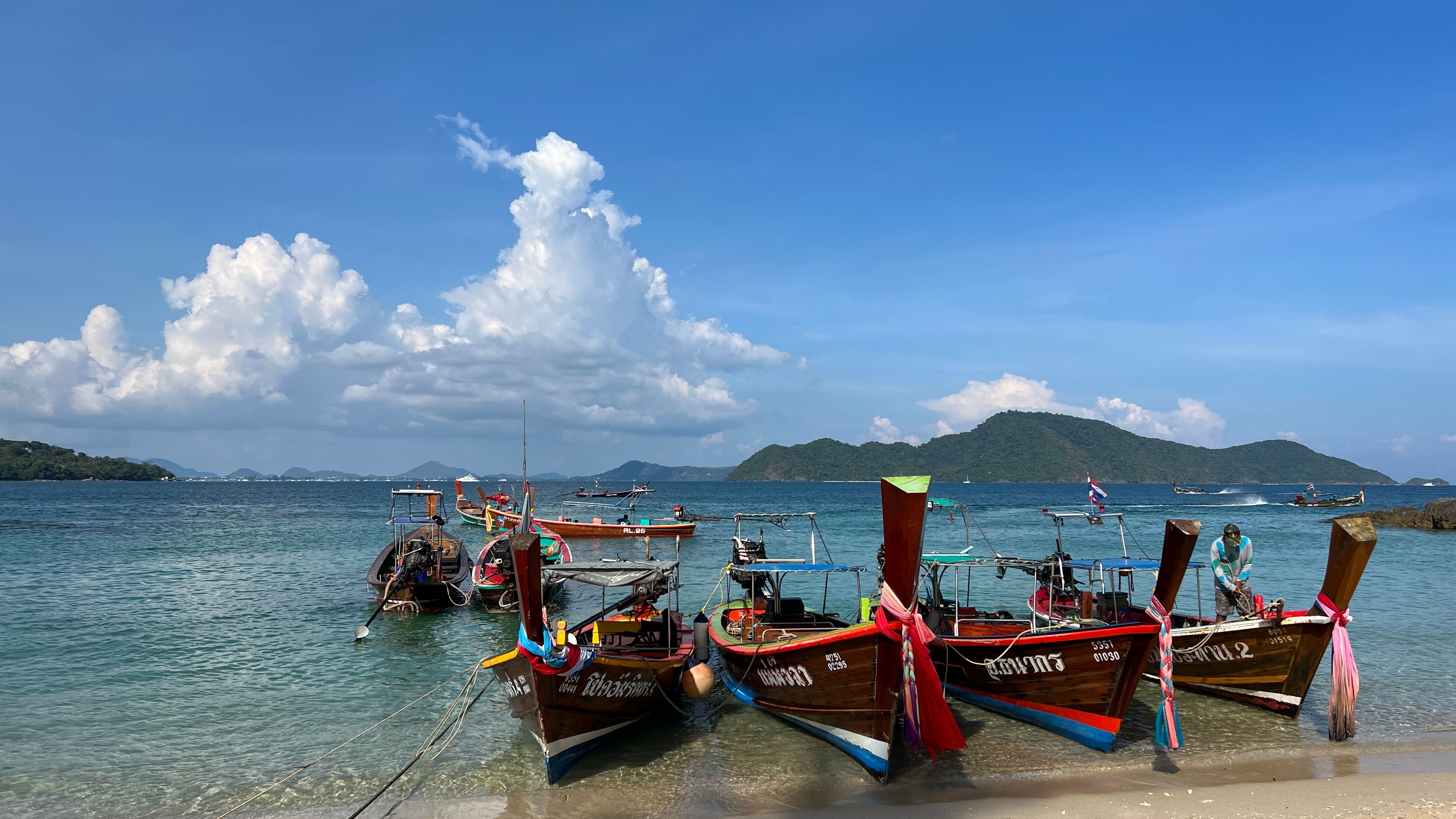
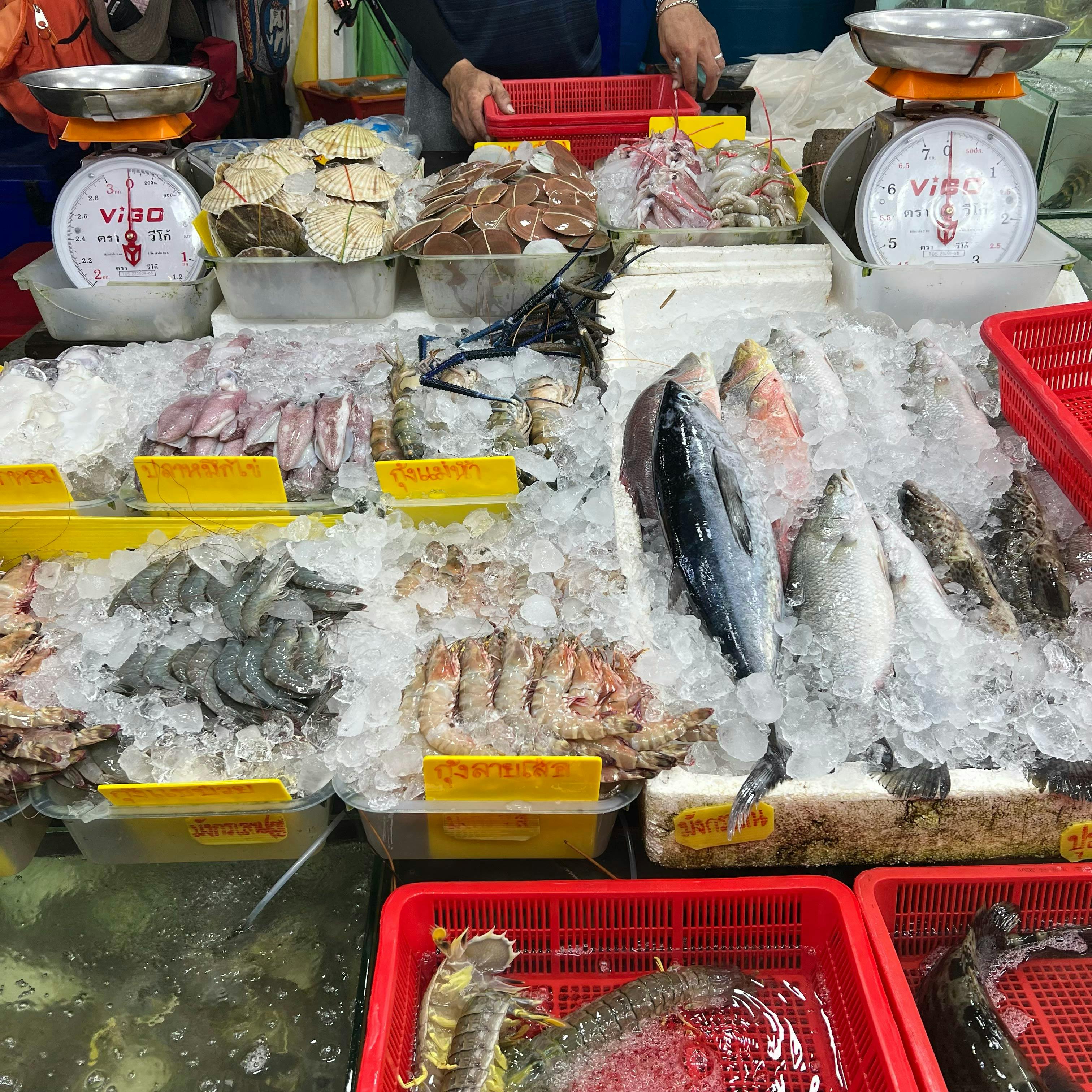
Along the seafront road, the Chao Lay (sea gypsy) fishing village runs a row of stalls selling the day's catch: prawns in graded sizes, squid, blue swimmer and mud crabs, snapper, sea bass, grouper, shellfish, and lobster when the boats have found them. Prices are per kilo, chalked up or quoted on request, and they're local prices — this is where Phuket families buy. You pick what you want, watch it weighed, pay the stall, and receive your seafood in a bag.
Then you walk it across the road. The restaurants facing the stalls exist for one purpose: you buy it, they cook it. Hand over the bag, choose your preparations — this fish steamed with lime and chilli, those prawns with garlic and pepper, the crab in curry powder — and pay the cooking fee, roughly ฿100–150 per kilo cooked depending on dish, plus rice, vegetables and drinks from their menu. Twenty minutes later your exact fish, cooked your way, is on the table in front of the sea where it was caught.
A few practical notes that make Rawai work even better. Go late afternoon — the stalls are fully stocked, the heat is dropping, and dinner lands as the sun goes down over the pier. Order fewer dishes than your eyes want: two or three preparations shared is a feast; five is a regret. Agree every number before the bag leaves your hand — the system is honest, but clarity is what makes it relaxing. And bring cash or have PromptPay ready; the stalls are not card territory. A full Rawai feast for two — say a kilo of prawns, a crab, a fish, rice and drinks — generally lands somewhere in the ฿800–1,800 range all-in depending on your choices, which is why locals treat beachfront seafood restaurants elsewhere on the island as a sometimes thing.
The main catches, honestly described
Lobster: the one to understand before you spend. Phuket has a genuine local lobster, and also a swamp of hype around the word. What swims here is the spiny (rock) lobster — no big claws, sweet tail meat, the pretty striped shell you see in photos. The local pride is the multi-coloured Phuket lobster from deeper water, a real delicacy marketed hard in recent years; when it's genuine and fresh, it's excellent — but it's also among the most expensive things you can order on the island, priced at a premium per 100g that adds up fast on a big animal, and not every "Phuket lobster" on a beach menu is the seven-colour local article. The clawed Maine-style lobster in tanks is imported and priced like it. Honest guidance: if lobster is your celebration, buy it at Rawai by weight where you can see it, and confirm the total first. If you just want the flavour of the sea without the drama, big prawns deliver more eating per baht, every time.
Prawns: the island's best value luxury. Tiger prawns and banana prawns come in graded sizes, and the jump in price from medium to jumbo is real but so is the jump in eating. A kilo of medium prawns grilled or in tom yum is one of the great cheap thrills of Phuket; the giants are for showing off. Typical market pricing for good prawns runs roughly ฿250–600 a kilo by size, with restaurant tank prices well above that.
Crabs: two different animals. Blue swimmer crab is the sweet, delicate one — the crab in Phuket's famous crab curry with betel leaf — more fragile, quicker to cook, usually the cheaper of the two. Mud crab is the heavy artillery: dense, rich, the one for curry powder (pu pad pong kari) and chilli crab-style preparations, and priced accordingly, often ฿800–1,400 a kilo live at markets in recent seasons. Whole crab also means work at the table; if you want crab flavour without the toolkit, crab curry over rice or fried rice does it.
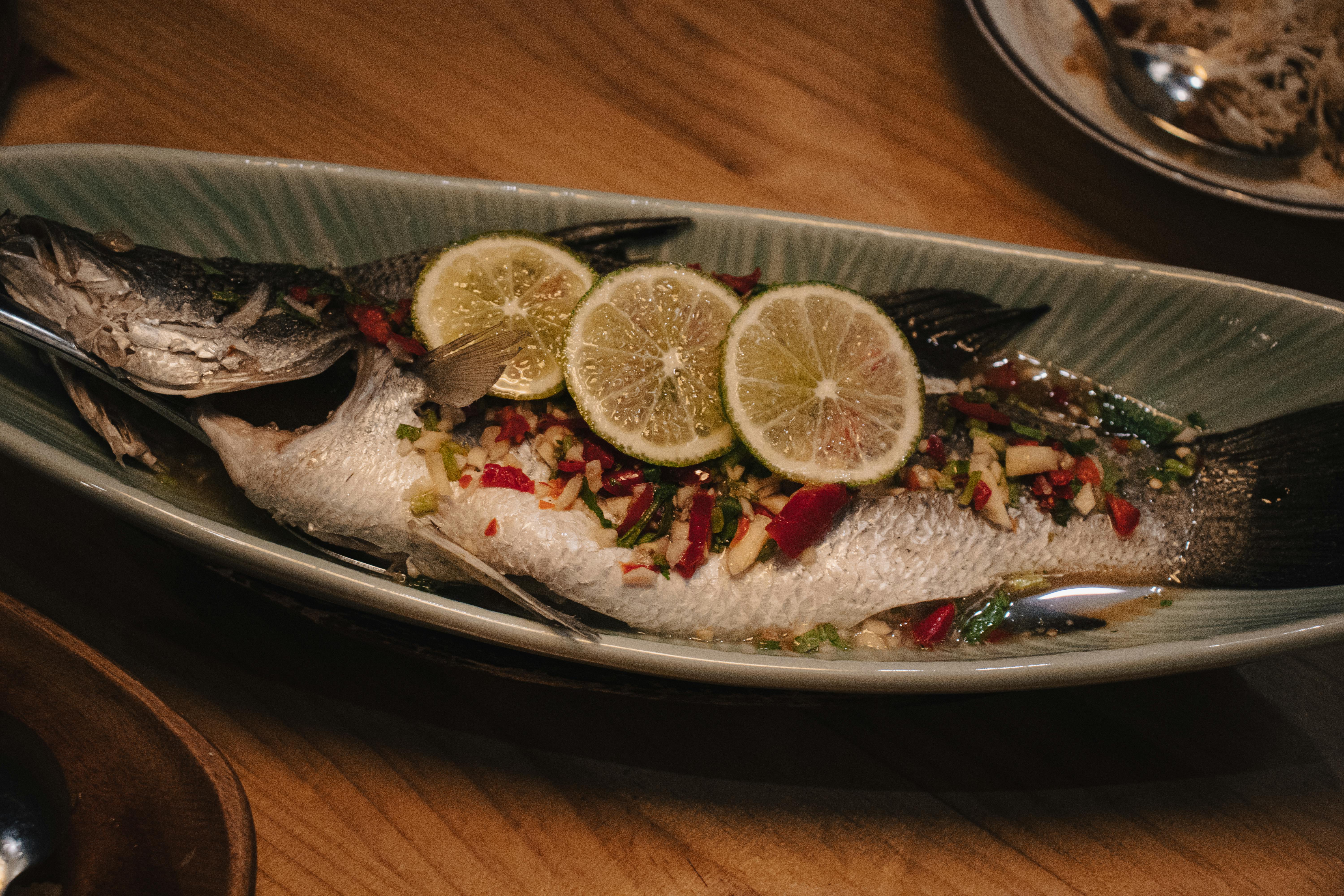
Fish: the steamed-fish hierarchy. Sea bass (pla kapong) is the default whole fish — firm, mild, and the classic choice for steaming with lime. Red and white snapper are a step up in sweetness and price. Grouper — especially the prized species from the tanks — is the connoisseur's steamed fish and the price reflects it; it's also the fish most worth eating live if you're paying tank money anywhere. Pomfret, when it appears, is delicate and lovely steamed with soy and ginger in the Chinese style.
The supporting cast. Squid here is superb simply grilled or with garlic and pepper — roughly ฿200–350 a kilo at market. Cockles, mussels and scallops are cheap and plentiful; the local scallops steamed with garlic butter sauce are a market-stall ritual. Phuket's oysters are small, sharp and briny rather than huge and creamy — eat them Thai-style, with fried shallots, chilli jam and a squeeze of lime.
Seasons: when the sea is generous and when it isn't
Phuket's seafood calendar is ruled by the monsoon. November to April is the calm-water season: boats go out freely, the catch is at its widest, quality peaks, and prices are at their fairest — though the Christmas-to-New-Year weeks push popular items up on demand alone. This is when lobster and the big crabs are most reliably found, and when you'll see the fullest stalls at Rawai.
May to October is the southwest monsoon. The Andaman gets rough, small boats stay in more often, and the catch narrows: less variety, more variability, prices on premium live items (lobster especially) climbing when supply is thin. Nothing about monsoon-season seafood is unsafe or bad — the island eats seafood all year — but if you're choosing one week of the year for a blowout Rawai feast, choose the calm months. Crabs have their own rhythm too: locals will tell you the cooler months around the turn of the year give the fullest, fattiest mud crabs, and they're not wrong.
One more seasonal reality: conservation rules exist for some species, and the famous local lobster has faced real pressure from its own popularity — another reason prices have climbed. Eating what's plentiful — prawns, squid, crab in season, the fish of the day — is both the cheaper and the better-tasting strategy, in any month.
Ordering Thai-style: the dishes to know
A Phuket seafood meal is built from shared dishes around rice, ideally balancing one steamed or clear dish, one fried or grilled, and one curry or soup. These are the names to have ready:
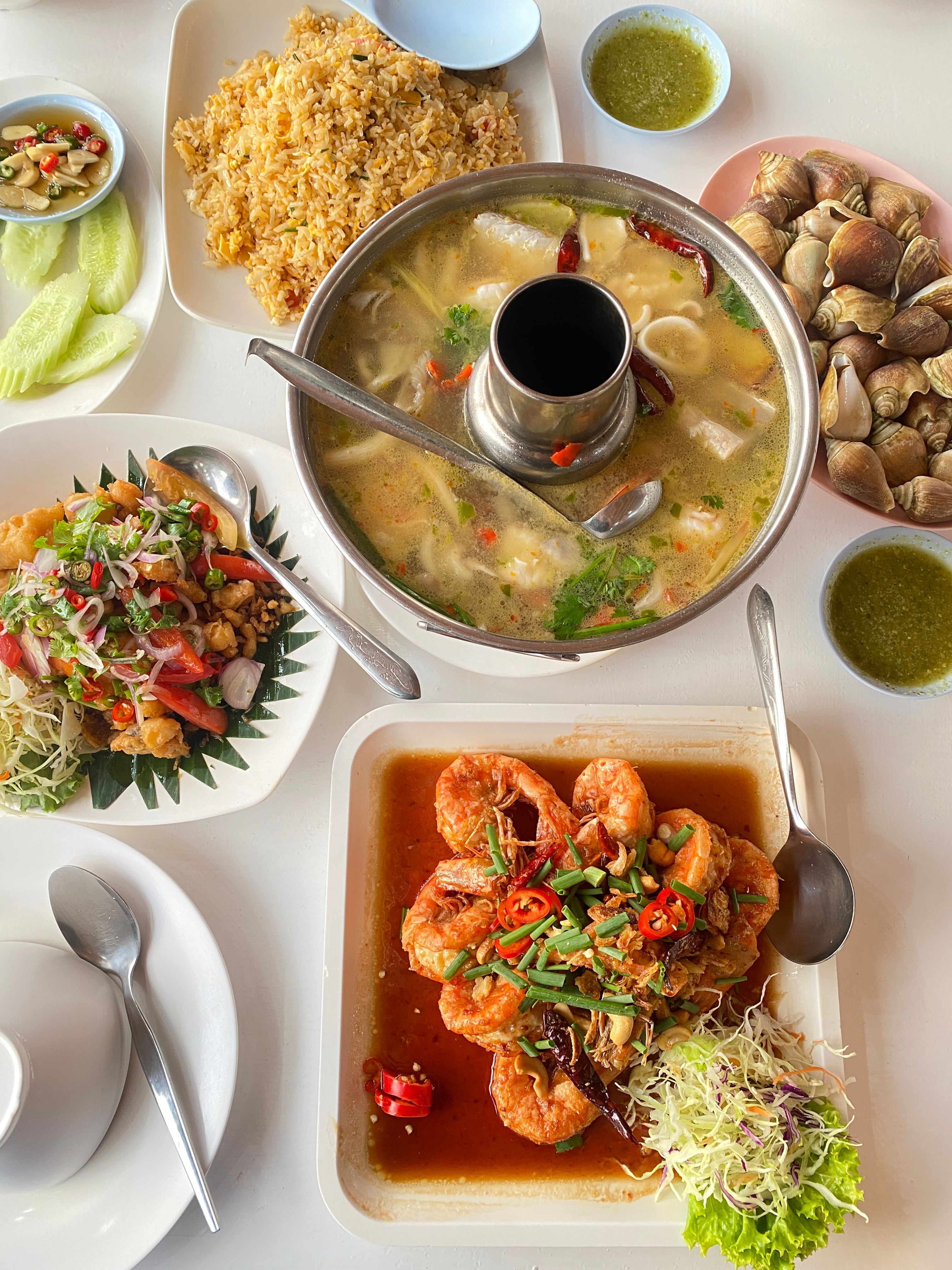
- Tom yum goong — the hot-and-sour prawn soup, lemongrass, galangal, lime and chilli. At a seafood place, made with proper big prawns, it's a benchmark dish: judge the kitchen by it.
- Pla rad prik — a whole fish deep-fried until crisp, then dressed with a sweet-hot chilli and tamarind sauce. Sea bass or snapper, shared, eaten with your fingers by the end.
- Pu pad pong kari — crab (whole mud crab, or picked meat if you ask) stir-fried in yellow curry powder with egg and celery. Rich, gently spiced, the dish that justifies mud crab's price.
- Gaeng pu bai cha plu — crab meat in a coconut curry with betel leaves, Phuket's signature luxury curry, usually eaten over khanom jeen noodles or rice.
- Pla neung manao — whole fish steamed in a lime, garlic and chilli broth; the clean, bright counterpoint to everything fried.
- Hoy tod — the crisp-edged shellfish omelette (mussels or oysters) over bean sprouts, more street food than restaurant dish, and all the better for it.
- Goong ob woonsen — prawns baked in a clay pot with glass noodles, ginger and pepper; deep, savoury, quietly rich.
Spice note: southern kitchens cook hot. Tom yum and the curries at local places arrive at local heat unless you say "pet nit noi" (a little spicy) — which will still have a pulse, and is usually the right call.
Market etiquette and the haggling reality
Seafood markets in Phuket run on goodwill and repeat business, and the etiquette is simple. Touch with your eyes, mostly: point at what you want rather than handling the catch — vendors will lift and show you anything. Check freshness the local way: clear eyes and red gills on fish, a sea smell rather than a fishy one, prawns firm and unbroken, live crabs that move when nudged. A good vendor will swap a doubtful piece without being asked.
On haggling: at Rawai and the local markets, prices are essentially fair as quoted, and hard haggling is neither expected nor well received — these are working fishing families, not souvenir stalls. If you're buying a lot, a gentle question about a round number for the whole pile is fine and often met halfway. The real savings don't come from bargaining; they come from choosing well — medium prawns over jumbos, ice over tank, the plentiful fish over the famous one.
The tourist traps, named plainly
None of these are universal, and most Phuket seafood sellers are honest. But the traps that do exist are consistent, so here they are:
- The per-100g switch. Already covered, because it's the big one: confirm the unit before weighing. A bill shock at the end almost always starts here.
- The substituted fish. You picked a fine grouper from the tank; a lesser fish arrives under the sauce. Guard: at tank restaurants, watch your fish come out of the tank, and learn what you ordered looks like — grouper skin and shape are distinctive. At Rawai this trap barely exists, since you carry your own fish across the road.
- The generous scale. Weighing seafood dripping wet, on a bed of ice that gets weighed with it, inflates the kilo. Reasonable places drain and shake off before weighing; if the scale work looks careless, ask them to drain it. A kilo of water at prawn prices is an expensive drink.
- Dual pricing. Visitor-facing beachfront strips are where inflated "farang price" menus live; the same island has local prices a street or two inland and at the markets. This is less a scam than a location tax — you now know where the locals' version is.
- The unpriced "special." A recommended special whose price never gets stated is a blank cheque. The fix is one sentence — "how much per kilo, all-in?" — asked cheerfully, before yes. Nobody honest minds the question.
What it should cost: a fair yardstick
Prices drift with season, fuel costs and the catch, so treat these as orientation, not gospel — the typical bands you'll meet at local markets and honest market-style restaurants in recent seasons. Live-tank restaurants and beachfront dining rooms will sit well above these, sometimes double.
- Prawns: roughly ฿250–600 per kilo by size at market; a tom yum or garlic prawn dish from half a kilo feeds two as part of a spread.
- Squid: roughly ฿200–350 per kilo.
- Blue swimmer crab: roughly ฿350–600 per kilo; mud crab: roughly ฿800–1,400 per kilo live.
- Sea bass and snapper: roughly ฿300–600 per kilo for good whole fish at market; grouper notably more.
- Local spiny lobster: the luxury outlier — often quoted per 100g; expect an all-in figure from around ฿1,500 upward for a modest animal at market rates, and far more at premium restaurants. Confirm the total weight and price before committing.
- Cooking fees where they apply: roughly ฿100–200 per kilo, depending on the dish.
Cross-check any quote against the pattern rather than the digit: if a beachfront place's per-kilo price is roughly double Rawai's, that's the location tax — sometimes worth it for the sunset. If it's triple and nobody can explain why, eat somewhere else.
The short version
Phuket rewards the seafood eater who learns three habits: confirm the unit and the total before anything is weighed, buy where the island buys, and order what's plentiful. Do those and the island's seafood stops being a lottery and becomes what it is for locals — the best-value luxury in Phuket, eaten with your sleeves up, a mountain of shells in the middle of the table, and the boats that caught it bobbing in the water in front of you. Start at Rawai, learn the system there where it's most transparent, and you'll be able to read every seafood menu on the island like a local.
More Phuket guides — beaches, boating, golf and nightlife — live at PhuketLive.com, and if you're basing yourself in Patong for the eating, booking direct keeps more of your budget for the seafood.


Comments
Post a Comment