Thai Food Phrases That Change Your Meal
You don't need Thai to eat well in Phuket — pointing and smiling has fed millions. But a handful of phrases changes the deal completely. With these, you can control the heat, cut the sugar, get the dish the cook makes for staff, and pay the bill in one breath. Thai tones are forgiving in food contexts; if your mouth is near food and you're gesturing at a menu, people will meet you more than halfway.
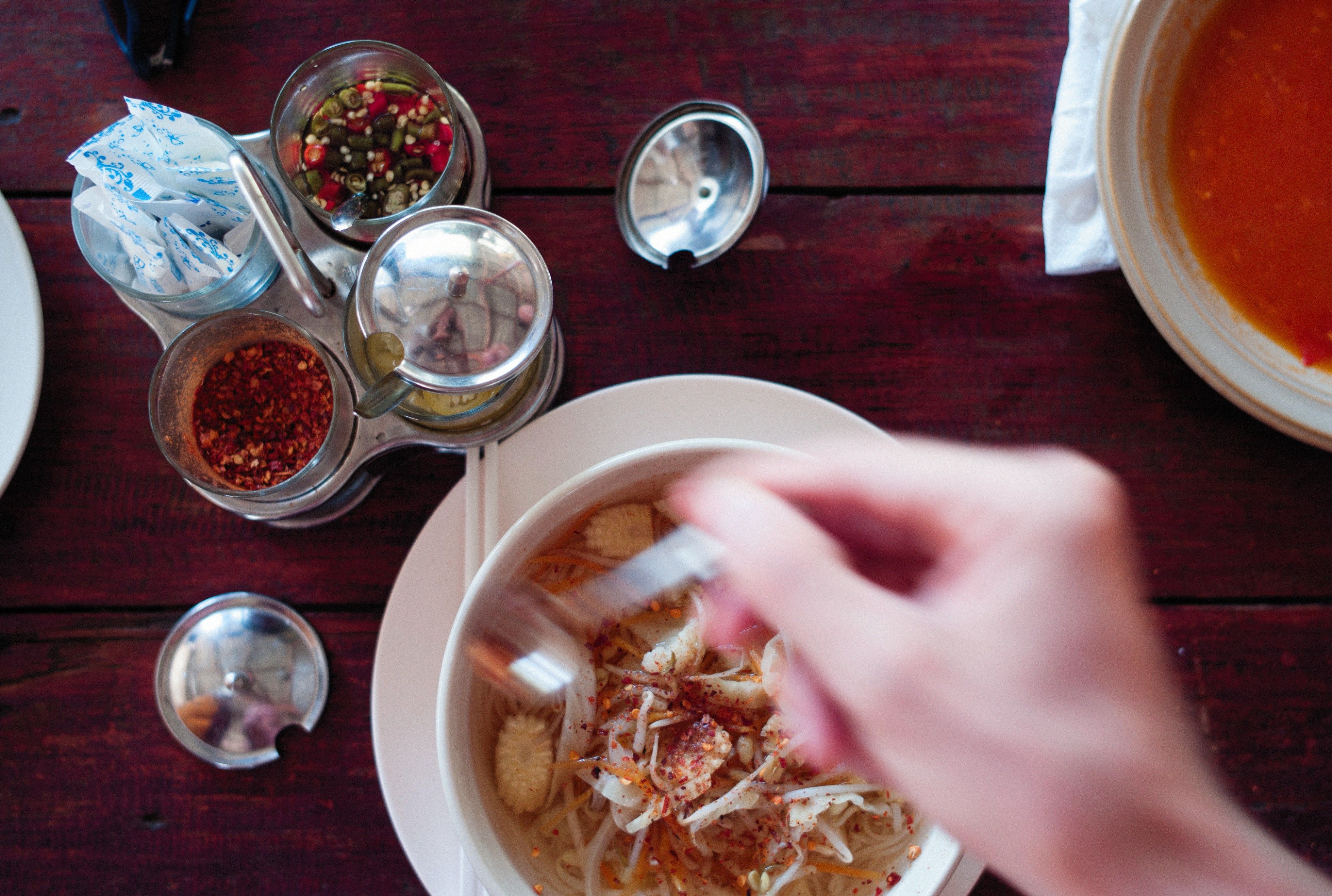
Heat: the three settings
- "Mai pet" — not spicy. The single most useful phrase in the country.
- "Pet nit noi" — a little spicy. The sweet spot for most visitors.
- "Pet-pet" — properly spicy, said with a grin. Only if you mean it; in the south, they will believe you.
Add "ao sam-rap dek" (make it for a child) and the kitchen rebuilds the dish mild from scratch instead of just pretending to hold the chilli.

The flavour controls locals actually use
Thai food is balanced at the table, and these phrases let you steer it:
- "Mai sai nam-tan" — no sugar. Phuket and southern cooking can run sweet; this one phrase fixes half the dishes tourists find "too sweet."
- "Mai sai pong chu rot" — no MSG. Not a judgement — some people are sensitive, and cooks handle the request daily.
- "Priao noi" / "kem noi" — less sour / less salty, for fine-tuning.
- "Sai pak yoeh yoeh" — lots of vegetables, please. Cooks respect it.
And the master key: "ao baep khon Thai" — make it the Thai way. At a good shop this quietly upgrades everything: real heat, real funk, no tourist softening.
Getting fed, getting what you want
- "Mee arai nae-nam?" — what do you recommend? At a one-dish shop the answer is the dish; at bigger places it steers you to what the kitchen is proud of today.
- "Arai ork?" or "mee khao soi mai?" style asking — simpler: "mee [dish] mai?" (do you have…?) opens off-menu possibilities.
- "Piset" — special/extra. "Khao piset" means the bigger portion; "pao piset" ordering earns you the generous version of almost anything for a few baht more.
- "Sai tung glap baan" — pack it to take home. Every stall will bag leftovers or a whole second dinner without a blink.
Paying and leaving friends
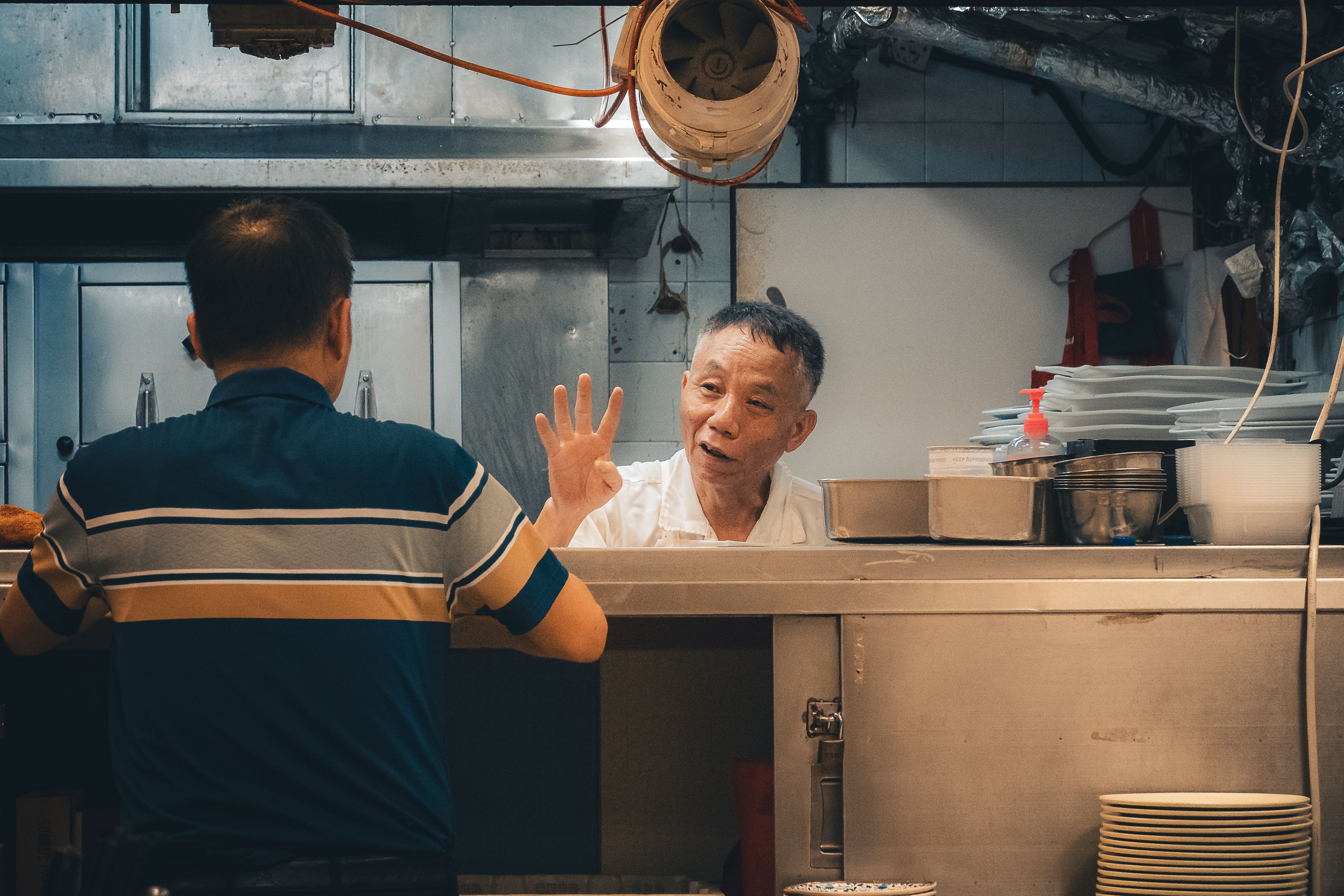
- "Check bin" / "geb tang" — the bill, please. "Check bin" is understood everywhere in tourist areas; "geb tang" is the politer local version.
- "Aroi mak" — very delicious. Say it as you pay and watch the cook's face. It costs nothing and it is remembered.
- "Khop khun khrap/kha" — thank you (khrap for men, kha for women). The smallest phrase, the biggest effect.
Dietary lines, drawn politely
Two more earn their keep. "Pom gin jay" means you eat strict temple-style vegetarian; "pom mai gin neua" means you don't eat meat (swap in "moo" for pork or "plaa" for fish as needed). State it once, early, before the cooking starts, and the kitchen will route around it without fuss. And if a dish arrives wrong anyway, "mai pen rai" — never mind, it's fine — keeps the whole exchange smiling; the replacement plate usually lands fast, and the goodwill outlasts the mistake.
One last tip
Write your key phrases on your phone in Thai script — most translation apps will show it — and hold it up when pronunciation fails you. Nobody in Phuket minds. In fact, a foreigner trying to order properly in Thai is one of the island's favourite small entertainments, and the plate that comes back usually proves it.
Hungry for the rest of the island's table? PhuketLive.com has the full food guides, and PhuketDining.net goes dish by dish.


Comments
Post a Comment