Thai Cooking Classes in Phuket: How to Choose and What You'll Actually Learn
Almost everyone comes home from Thailand promising to cook Thai food more often, and almost everyone gives up around the third attempt at a curry that tastes like a warm candle. A good cooking class in Phuket is the difference between those two outcomes. Not because a half day with a wok makes you a chef — it doesn't — but because Thai cooking is a small set of techniques and one balancing act, and once someone shows you the act in person, with your own tongue as the judge, the cookbooks start making sense.
Phuket is a genuinely good island to learn on. It's a UNESCO Creative City of Gastronomy, its markets are loaded, and classes run at every level from a morning in a Phuket Town home kitchen to white-jacketed sessions at the big resorts. The catch is that "cooking class" covers a wide range of experiences, and the price difference between the best and the most ordinary is smaller than you'd think. This guide walks through the formats, what a class can honestly teach you, what it costs, and the questions that separate the real schools from the photo opportunities. Prices are typical ranges in baht — a fair yardstick, not a quote.
The four formats, honestly compared
Market tour plus cooking: the gold standard
The strongest format starts where Thai food starts — in a fresh market. You meet your teacher early, walk the stalls while the market does its real morning business, and learn to choose: how to pick lemongrass that snaps instead of bends, what galangal looks like versus ginger, which coconut milk is squeezed at the back of the market and which comes from a carton. You taste as you go. Then you carry the bags back to the kitchen and cook the food you just shopped for.
This is the format to choose if you only take one class. The market hour is not a scenic warm-up; it's where half the learning happens, because ingredient selection is half of Thai cooking, and no teacher in a tiled kitchen can show you a fish's eye in a photograph. Market classes run in the morning — start around 8:30 or 9, cooking by 10:30, eating your own work for lunch. Some run an afternoon version with ingredients bought that morning — fine, but the early version is the real thing.
Hotel and resort classes: polished, convenient, narrower
Most mid-size and large resorts on the west coast — and several Phuket Town hotels — run classes for guests and walk-ins. They tend to be well organised: spotless stations, printed recipes, a chef who has taught the same tom yum four hundred times and teaches it well. What you usually don't get is the market — ingredients arrive prepped — and the group can be large in high season, which thins out the hands-on time.
None of that makes them a bad choice. If you're staying at the resort anyway, have limited time, or want a relaxed, air-conditioned experience rather than a food education, a hotel class does exactly that. Just know what you're trading: polish for depth. Prices sit at the top of the market, and you're paying partly for the setting.
Home-style small classes: the local favourite
Phuket Town and the beach towns — Kata, Rawai, Patong's quieter back streets — are full of small schools run out of homes, garden kitchens and little shophouses, often by one teacher who shops, teaches and washes up with a helper or two. Groups run small, sometimes four to eight people; the teacher knows your name by the second dish; and the cooking is the cooking of a Thai home, which is precisely what most visitors want to reproduce. You'll pound a paste by hand at least once, cook over serious flame, and sit down to a table that keeps filling up.
These classes vary more than the hotel ones — in English level and organisation — and that's the honest trade. In return you usually get the most teaching per baht on the island, and the classes visitors talk about for years afterwards are disproportionately this kind. Reviews matter more here than glossy websites; detailed, specific reviews beat a famous name with generic ones.
Private and family sessions: your group, your menu
Most schools, small and resort alike, will run a private version: just your group, a menu agreed in advance, timing to suit you. It costs more per head than joining a group — sometimes double at small schools, sometimes a modest supplement at resorts — and buys you pace and control. For families, groups with one keen cook and three tag-alongs, and anyone with dietary needs needing a proper conversation, private is often the smart money. More on kids below.

What a good class actually teaches you
The balance framework — the whole game in one idea
Thai dishes are built on a tension of hot, sour, salty and sweet, and no recipe can give you the ratios, because ingredients refuse to cooperate: this lime is sourer than that one, these chillies are having a strong week. A good teacher makes you taste at every stage and adjust against your own palate — add lime, taste; add sugar, taste; the soup comes alive at a point that is different every day. This is the single most valuable thing a class gives you, and the thing videos can't. If a class has you measuring everything and never tasting, you've bought a demonstration, not a lesson.
Expect the order of operations, too: aromatics bruised rather than chopped fine, curry paste fried in the thick top of the coconut milk until the oil splits and it smells like dinner, proteins added where they cook in the sauce rather than swim in it. Small things — and the entire difference between your curry and theirs.
The classic five-dish set
Most half-day classes cook four or five dishes, and the cast is remarkably consistent: tom yum goong (the balance lesson in a bowl), pad thai (the wok lesson: heat, speed, tamarind), a green curry with chicken (the paste lesson), som tam papaya salad (the pounding-and-tasting lesson), and mango sticky rice to finish (the sweet lesson). Menus rotate by weekday at most schools — Monday might swap in a massaman, Friday a Phuket-leaning dish — so if your heart is set on a specific dish, check which day cooks it. Phuket's better classes sometimes add a local specialty you won't find in a Bangkok class: a Hokkien noodle dish, a southern curry, an o-tao. That's a point in a school's favour.

Paste from scratch, and the jar honesty
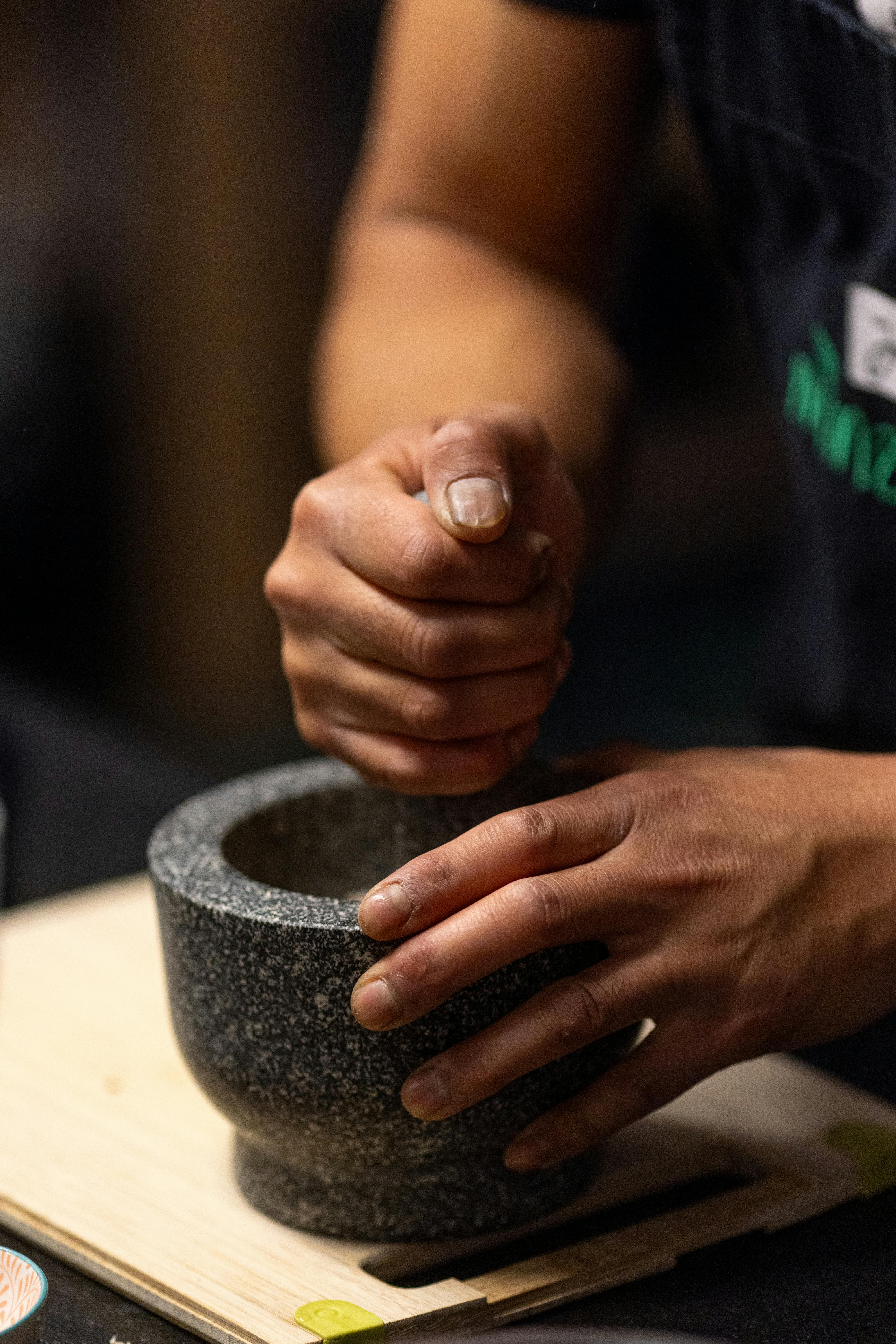
Many classes have you pound a curry paste in a granite mortar — galangal, lemongrass, chillies, garlic, shallots, shrimp paste — and it teaches you two things: what fresh paste smells like (nothing in a jar is close), and how much work it is (considerable). A good teacher will then be honest with you: Thai home cooks use bought paste on weeknights too, good brands exist, and the skill is knowing how to wake a jar up with fresh aromatics and correct seasoning. Treat any class that presents jarred paste as cheating with suspicion — it's selling purity instead of teaching you dinner.
The wok-heat reality check
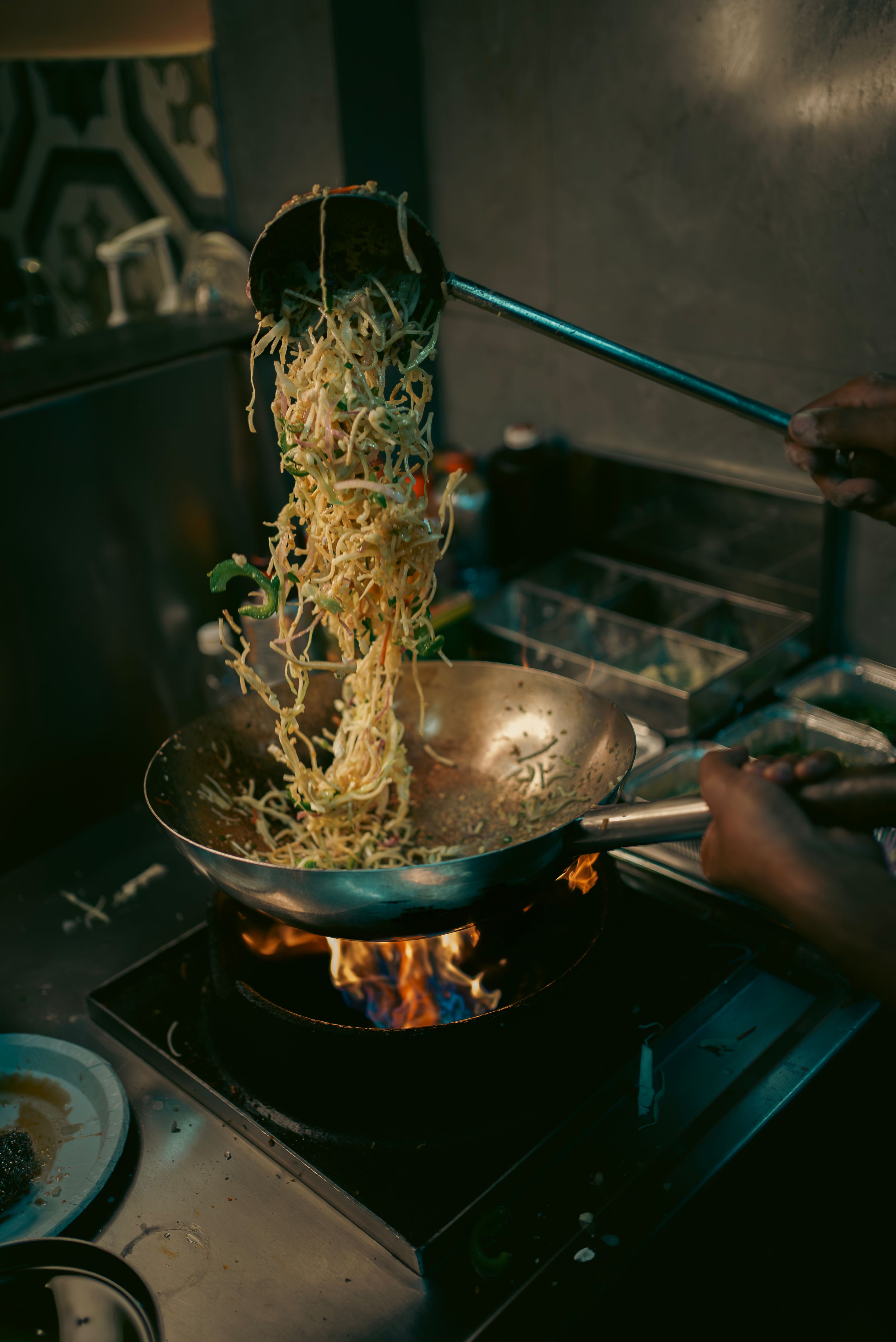
Restaurant wok cooking in Thailand happens over burners with the output of a small jet engine, and your stove at home is not that. A good class acknowledges it and teaches the workarounds: smaller batches, a properly hot pan, no crowding, and accepting that home pad thai is a close cousin rather than a twin. If a teacher pretends your induction hob will produce identical results, they're performing. The ones who teach adaptation have thought about your kitchen, and you'll use what they say for years.
Time, groups and language: the practical shape of a class
Length. The standard unit is the half day — roughly four to five hours door to door for a market class, three to four for a kitchen-only one — ending with the meal you cooked. Full-day classes exist at the keen end: more dishes, a slower pace. Full day is for people who cook seriously at home; for most visitors the half day lands exactly right, and you'll be full in every sense.
Timing. Morning classes own the markets and finish with lunch — the classic shape. Afternoon classes start after lunch, skip or shorten the market, and finish with dinner; they're the fallback if mornings don't work, and the better choice in the hot months if you wilt. Evening short classes at some resorts — two dishes, a cocktail-adjacent mood — are entertainment, and good entertainment.
Group size. This is the number that quietly decides quality. Four to eight students with individual cooking stations means you cook everything yourself. Twelve to sixteen with shared stations means you cook half of everything and watch the rest. Twenty-plus means a demonstration with garnish. Ask the actual maximum, not the typical number, and how many stations there are. One station per person — or per couple who've agreed to share — is the line between a class and a show.
Language. Teaching is almost always in English, and at established schools it's clear, practised English. At small home classes it may be simpler — which rarely matters: cooking is shown more than said, and "taste, more lime?" needs no grammar at all. What matters is that the teacher can explain why, so favour schools whose reviews praise the teaching, not just the food.
What it costs
Typical ranges, hedged and inclusive of the meal you cook and eat:
- Small home-style schools, half day with market tour: roughly ฿1,200–2,000 per person — the island's sweet spot for value.
- Established mid-size schools, half day: roughly ฿1,800–2,800 per person, usually including hotel transfers from the main beach towns.
- Hotel and resort classes: roughly ฿2,000–3,500 per person for two to three hours — check what's included; the hours are often shorter.
- Private sessions: from around ฿4,000–6,000 for a couple at a small school, rising with group size and setting.
- Full-day serious classes: roughly ฿3,000–5,000 per person.
Transfers are commonly included from Patong, Kata and Karon at the schools that run them, and worth confirming from further-flung bases like Rawai or Bang Tao — a "free pickup" that doesn't reach your hotel can quietly add a taxi fare each way. Children are usually charged less, or nothing at the smallest ages; ask rather than assume.
Seven questions to ask before you book
- Do I cook every dish myself, at my own station? The most important question on this page. "Hands-on" in a brochure can mean you held a spatula once.
- Is the market tour included, and do we shop for our own ingredients? Confirm it actually happens — a few classes advertise a market visit that's really a ten-minute photo stop.
- What's the maximum group size, and how many teachers? See above. Get the maximum, not the average.
- Which dishes, on which day? Menus rotate. If the class matters to you because of one dish, pin its day down.
- Do I get the recipes to take home — and in what form? Some schools hand you a printed booklet, some email a PDF. A booklet in hand, with space for your own tasting notes, is worth more than it sounds.
- How do you handle dietary needs? Vegetarian cooking is easy in Thailand and every decent school swaps proteins and uses mushroom or soy-based seasoning without blinking — the country's jay (vegan) tradition means the substitutions are native, not improvised. Halal is handled by many schools too, given Phuket's large Muslim community: ask about meat sourcing and whether the kitchen can shop and cook halal for your session. Allergies — peanut and shellfish above all — must be raised when booking, not at the market; a good school will restructure your dishes around them.
- What's the pickup area and the wet-weather plan? Phuket rains sideways in the green season. Schools run regardless — markets have roofs, kitchens are covered — but knowing the plan removes the doubt.
Where the classes are
Phuket Town is the natural home of the market-based class: the island's biggest fresh markets are here, the morning food culture is strongest here, and many home-style schools operate in and around the old town. If your trip has a Town day in it anyway, put the class on it. Patong has classes through its hotels and a few independent schools in the quieter streets behind the strip — convenient if you're based there, though the market component may mean a drive toward Town. Kata and Karon run mostly resort classes plus a small school or two, handy and relaxed. Rawai, in the south, pairs naturally with its famous seafood market — classes down there lean seafood for obvious reasons, and a morning shopping the Rawai stalls then cooking what you bought is about as good as this format gets. The transfer question above matters more than the map: schools that collect from the beach towns erase most of the geography.
Taking it home: making the class stick
The class ends; the cooking is supposed to begin. A few honest bridges between the Phuket kitchen and yours:
Sourcing. Everything essential exists in any decent Asian market at home: fish sauce, tamarind paste, dried chillies, rice noodles, sticky rice, coconut milk. Fresh galangal, lemongrass and lime leaves freeze well and are worth buying in quantity when you find them good. Thai basil is the one ingredient with no real substitute and a short life — grow it in a pot if your climate allows.
Paste, honestly. You will pound paste from scratch a few times, with pride, for people you like. For Tuesday nights you will use a good jarred paste — as Thai cooks do — lifted with fresh garlic, chilli and aromatics, and it will be good. The class's gift isn't the mortar technique; it's that you now know what the jar is imitating.
Three tools worth buying. A granite mortar and pestle if your luggage and spine allow (the heavy one, not the souvenir one — in Phuket they're cheap). A proper wok or a heavy flat-bottomed pan suited to your stove. And the habit of tasting and adjusting before serving, learned at the class — the tool you'll use daily, and it costs nothing.

Special cases: kids and serious cooks
Kids. Children genuinely enjoy these classes — the market is an adventure, the mortar is a drum you may hit food with, and eating something you made yourself is a reliable thrill. Practical notes: under about seven, most kids do better in a private or family session than a group class, where the pace is set by adults; most schools happily let young children join a parent's station free or cheap and cook "alongside". Sharp knives and wok flames are managed by the teachers, but say your children's ages when booking so the school can plan rather than improvise. A morning class beats an afternoon one for small people: energy is up, the market is lively, and lunch arrives before the crash.
Serious cooks. If you already cook Thai food at home and want to level up rather than start, say so when booking and steer to the full-day or private formats: ask to cook beyond the classic five (a southern curry, a Phuket specialty, a dish built around the market's best fish that morning). Some Town schools will build a custom menu around techniques — fermentation, southern heat, Baba dishes — if you give them notice and a clear brief. You'll pay private rates and it will be worth it; the gap between a good cook teaching tourists and a good cook teaching you is mostly a matter of asking.
Choosing, in one paragraph
If it's your first class and you want the real thing: a small-group, market-first, half-day class where you cook every dish at your own station, recipes in hand, for somewhere in the ฿1,200–2,500 range — in Phuket Town if you can, from a school that collects you if you can't. If you want pleasure without homework, take the resort class and enjoy it without apology. Either way, taste everything, ask the teacher where they eat, and write your adjustments in the recipe's margin while your tongue still remembers. That's how the class survives the flight home — and how your third attempt at that curry stops tasting like a candle.
More Phuket food guides — the island's markets, its seafood, its southern curries and where the locals eat breakfast — live at PhuketLive.com.


Comments
Post a Comment