Rawai Seafood Market: You Buy It, They Cook It
Rawai, at Phuket's southern tip, runs the most entertaining seafood system on the island. There is no menu to study and no waiter taking your order at a table first. Instead, you shop. On one side of the road stand the fish stalls run by Rawai's sea gypsy community; on the other side sit the restaurants. You buy your seafood raw, carry it across the street, and pay the kitchen to cook it your way. It sounds like a gimmick until you do it once — then it becomes the only way you want to eat seafood in Phuket.
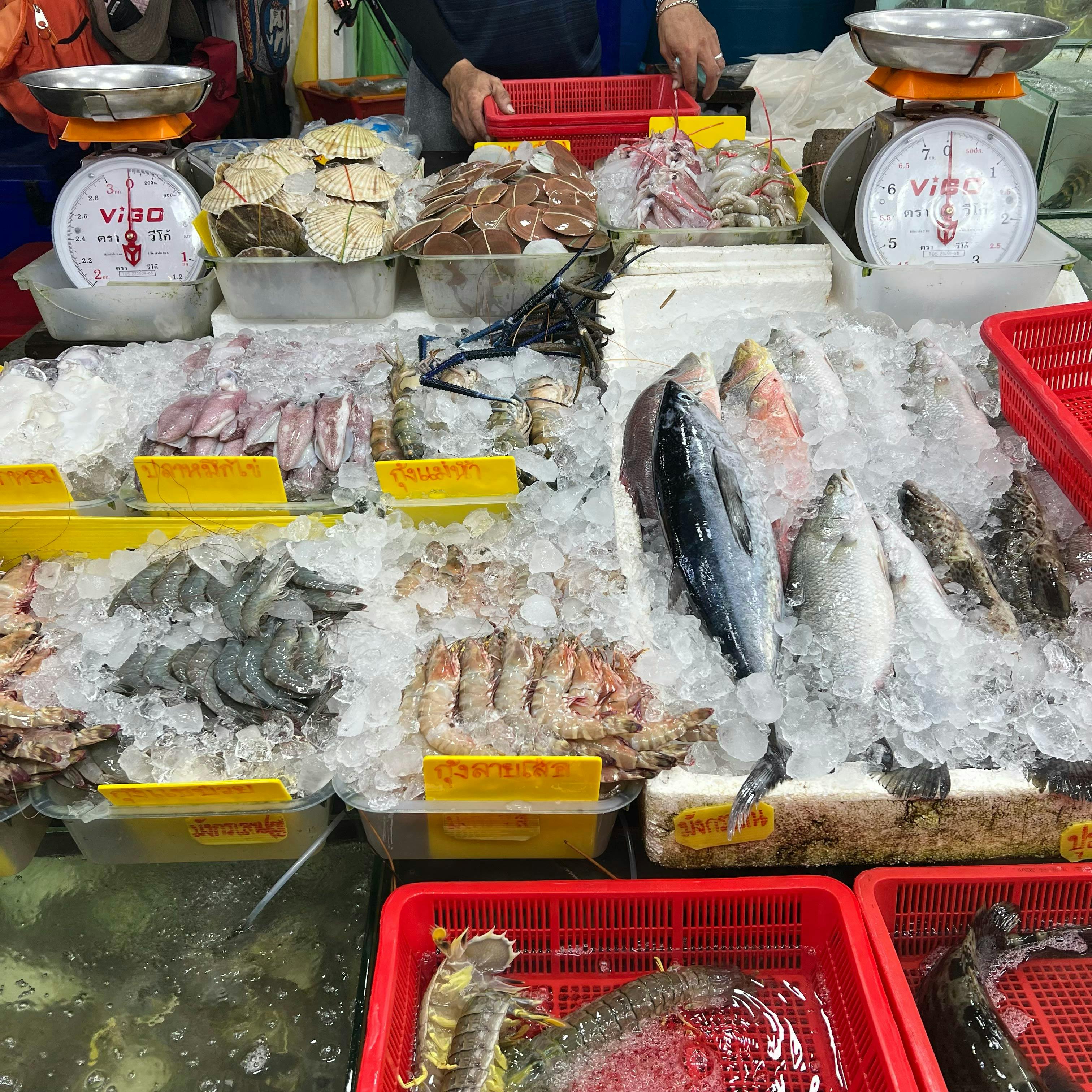
The buying side of the road
The stalls face Rawai Beach, which was a working fishing shore long before it was a postcard. What's on ice changes with the boats: tiger prawns and river prawns, blue swimmer crab and mud crab, squid, snapper, grouper, sea bass, clams, mussels, scallops and whatever else came in that morning. Much of it is alive or close to it, which is the whole point — this is seafood measured in hours, not days.
Everything is priced by weight, usually per 100 grams for the expensive items and per kilo for the rest. As a rough guide, prawns and fish at the stalls often land noticeably below what the same animal costs plated at a beach-road restaurant, while lobster and big crab are luxury items everywhere. Weigh what you're buying, ask the price before the bag is tied, and a little friendly haggling is normal — keep it smiling and keep it realistic.
The cooking side of the road
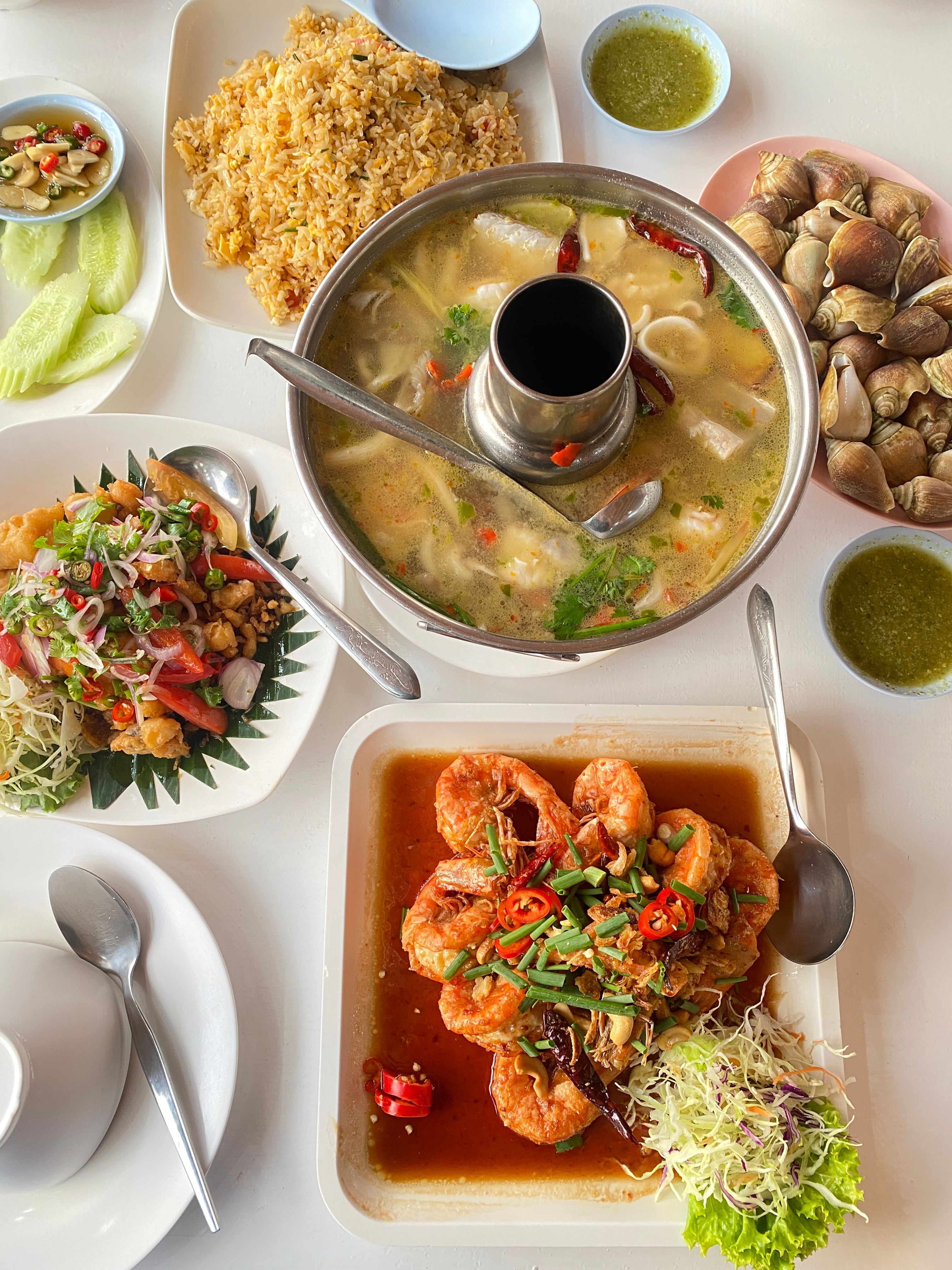
With your bags in hand, cross to the restaurants. They'll weigh your haul again and charge a cooking fee — commonly around ฿100–150 per kilogram or per dish, depending on the preparation. Then comes the best conversation of your day: how do you want it cooked?
The standard plays are all here. Prawns grilled simply, or steamed with lime and chilli. Crab in yellow curry powder, or stir-fried with garlic and black pepper. Fish steamed Thai-style with lime, garlic and herbs, or deep-fried and dressed with a sweet-sour chilli sauce. Squid with garlic and pepper. Clams with basil and chilli jam. Order two or three different preparations across your haul rather than one giant version of the same dish, add rice, a morning glory stir-fry and a cold drink, and the table fills up fast.
How to play it well
A few honest pointers from watching people get it right and wrong:
- Go for lunch or an early dinner. The selection is best earlier in the day, and the system runs smoothest before the evening crowd.
- Buy for the table, not per person. Shared platters suit the format; order a mix and graze.
- Confirm both prices. Seafood price at the stall, cooking fee at the restaurant — two separate bills, both settled before you eat.
- Don't over-buy. A kilo of prawns looks small in the bag and enormous on the plate. The stalls will happily sell you a banquet for six when you're two.
- Keep it simple on cooking. The fresher the animal, the less it needs. Grill it, steam it, and let it taste like itself.

Rawai isn't Phuket's cheapest seafood and it isn't the fanciest. It's the most fun — part market, part theatre, part dinner — and the closest most visitors get to eating the way the island's fishing families actually do: whatever came off the boat, cooked ten metres from where you bought it.
Hungry for the rest of the island's table? PhuketLive.com has the full food guides, and PhuketDining.net goes dish by dish.


Comments
Post a Comment