Phuket's Night Markets: A Food Lover's Field Guide
If you only eat in restaurants in Phuket, you've had half the holiday. The other half happens after dark, in the open air, on streets and market lots where a hundred stalls light their grills at the same hour and the whole island turns up to graze. Night markets here aren't a tourist show bolted onto the real town — they are the real town eating dinner. Families do their weekly food shopping between the same stalls where visitors are taking photos of fried grasshoppers. That mix is exactly why the food is good: most of the customers are Thai, most of them are repeat customers, and a stall that goes downhill gets found out fast.
This guide is written for eaters, so it's organised the way a food lover thinks: which markets are genuinely about food and which are shopping with snacks, what to hunt at each one, how to work a market so you finish full instead of frustrated, and what things honestly cost. One housekeeping note before the list: market days and hours shift with seasons, rain and local decisions. The schedules below are the typical patterns that have held for years — treat them as the plan, but check locally (your hotel desk, the market's Facebook page, or just ask anyone) before you cross the island for a specific night.
The big five, compared honestly
Sunday Walking Street (Lard Yai), Phuket Old Town — typically Sundays, late afternoon into the evening
The headline act, and it earns it. On Sunday evenings Thalang Road — the prettiest street in Phuket Town, lined with Sino-Portuguese shophouses — closes to traffic and fills with stalls, performers and half the island. This is the market to choose if you can only do one. It's food-first: row after row of serious eating, from southern curries and khanom jeen to grilled seafood, desserts and drinks, with a crafts-and-clothes section mixed in rather than the other way round. The setting does half the work — eating a ฿60 curry under a century-old shophouse facade, with the street lit up, is a genuinely lovely evening. The honest downsides: it's the most crowded market on the island, parking anywhere near it is a small project, and prices on the main street run a little above the purely local markets — still cheap, just not rock-bottom. Arrive before the worst of the crowd, around the time the stalls open, and eat as you walk the street in both directions.
Naka Market, near Central Festival — typically Saturday and Sunday evenings
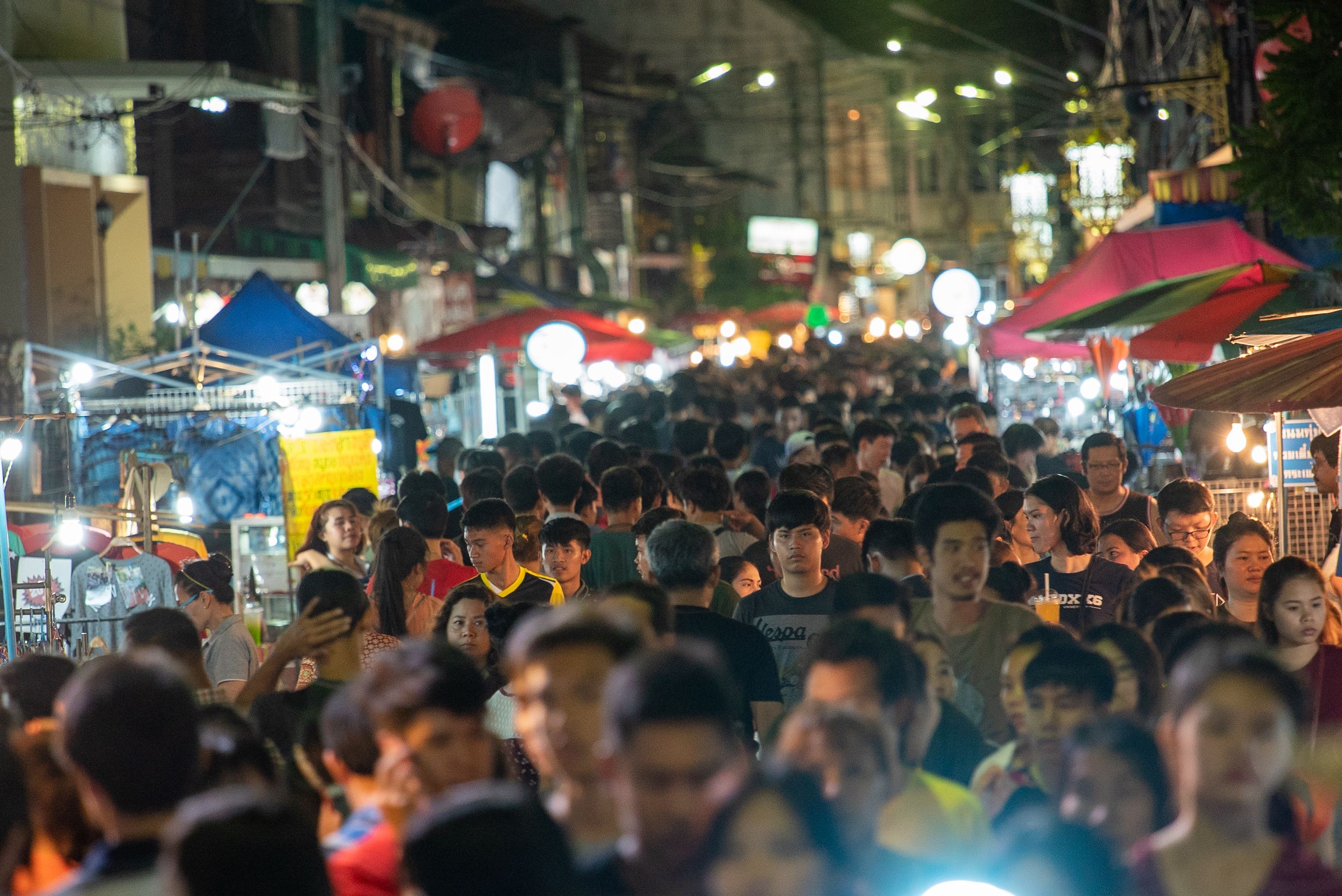
Naka is the giant. If Walking Street is the charming one, Naka is the local one — a sprawling weekend market on the edge of Phuket Town where Phuket families actually shop. It's split between a huge covered section of clothes, shoes, electronics and everything else, and a food zone that is the real reason to go. The food here leans local and cheap: southern curry stalls, noodle stands, grilled everything, dessert rows, and fewer dishes translated for visitors. That makes it the best market on the island for eating what Phuket eats, and the prices are the benchmark everything else gets measured against. It's shopping-first as a whole market, food-first in its food rows — which is fine, because you can ignore the shoe aisles entirely. Getting there and back from the beach towns means a taxi or a songthaew ride; budget for that, or fold it into an evening in Town.
Chillva Market, Samkong — typically a few evenings a week, including weekends
Chillva is the young, stylish one: a container-yard market built from painted shipping containers, with a pond in the middle, live acoustic music drifting over the tables, and a crowd that's mostly Thai couples and friend groups in their twenties. The food is good and a little more curated — grilled seafood, Japanese-ish snack stalls, craft drinks, crepes, the prettiest dessert stalls on the island's market circuit — and the vibe is more date night than family shop. Prices sit a notch above Naka, a notch below a beach-town restaurant. If Walking Street is the classic and Naka is the local workhorse, Chillva is the one you'd take a friend to show them the new Phuket. It's on the Town side of the island, so pair it with an Old Town afternoon.
Malin Plaza, Patong — typically every evening
Malin Plaza is the beach towns' answer: an open-air night market at the southern end of Patong that runs nightly, which makes it the easy option — no calendar arithmetic, just walk in. It's unapologetically tourist-facing, and that's not an insult. The seafood grills are the draw: prawns, squid, crab and shellfish cooked to order at prices well below the beach-road restaurants a few minutes north, plus the full market greatest-hits list — satay, pad thai, roti, mango sticky rice, smoothies. The honest read: quality varies more from stall to stall here than at the Town markets, and prices are the highest of the five on this list, but it's still market pricing, not restaurant pricing, and for anyone staying in Patong it's the best-value dinner within walking distance. Hunt the stalls with Thai customers eating at the tables behind them, not just taking photos in front.
The beach-town small markets — Kata and Karon, typically a couple of evenings a week each
Kata and Karon each have smaller market nights — Karon's is best known, set by the temple grounds on market evenings, and Kata's runs on its own smaller scale. These are neighbourhood markets: a few dozen stalls, a strong showing of local families, good basic Thai food, fruit, snacks and household shopping, and not much spectacle. That's their charm. If you're staying in Kata or Karon, eating at the local market once beats another night on the restaurant strip — cheaper, tastier, and it's the town feeding itself. Don't cross the island specially for them; do walk over if you're already there.
Temple fairs, seasonally
Woven through the year, temple fairs (ngan wat) pop up at wats across the island for a few nights at a time — for a temple anniversary, a festival, a fundraiser. You'll spot one by the ferris wheel, the stage lighting and the smell of grilling from the road. The food rows at a good temple fair are as local as Phuket eating gets: grandmothers selling desserts from family recipes, curry stalls, noodle stands, games for the kids. There's no schedule a visitor can plan around — if you pass one lit up at night, stop. That is the correct and complete strategy.
What to hunt: the market food hit list
Markets overlap, but each has strengths. Here's what to actively look for rather than stumble past.
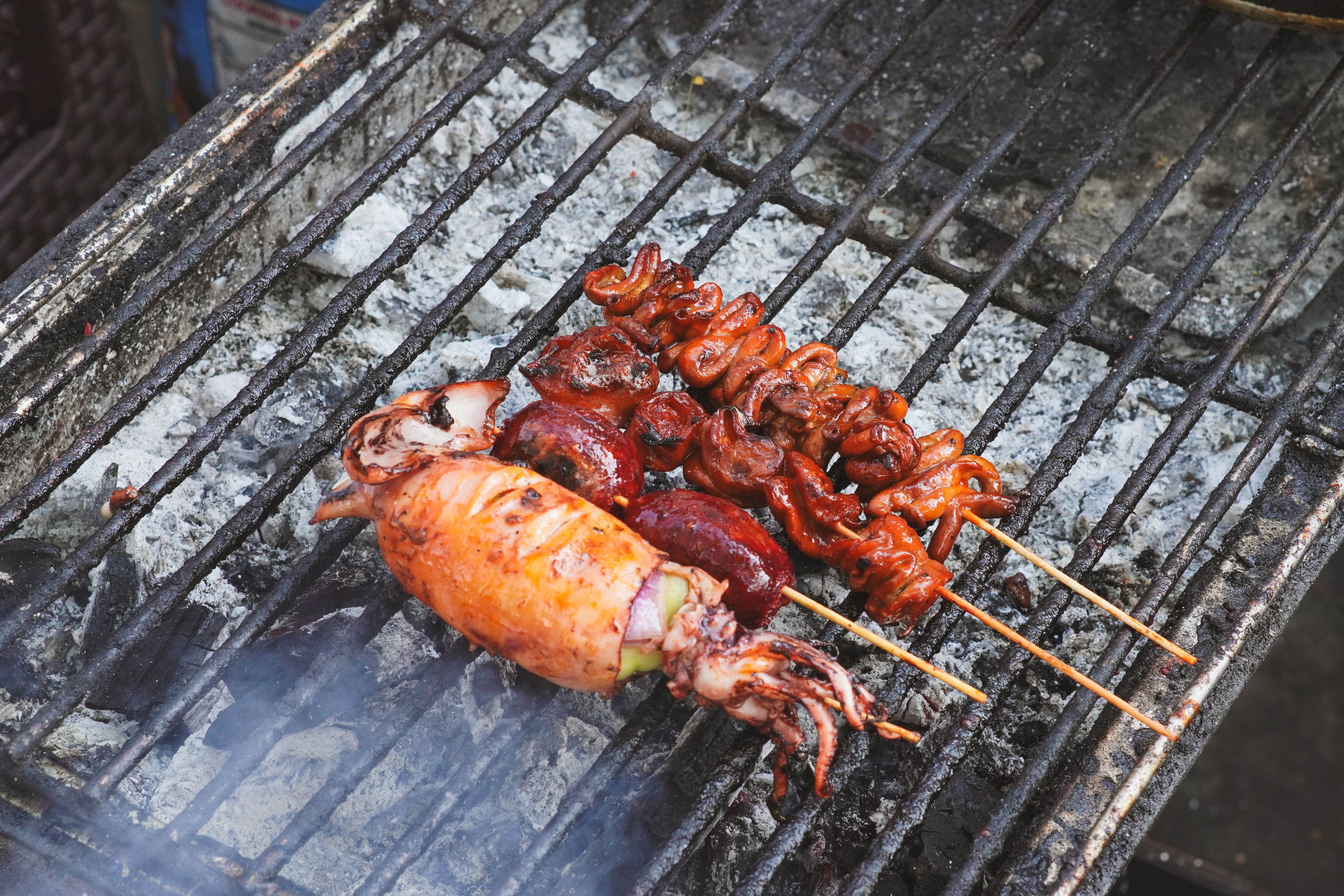
Grilled seafood skewers and the seafood grills. Squid, prawns, shellfish and fish on skewers or whole over charcoal — the smell signature of every Phuket market. Order by the skewer or pick your piece and have it grilled to order. Strongest at Malin Plaza and Naka; the Walking Street has plenty too.
Khanom jeen stalls. Fermented rice noodles with your choice of curries ladled over — fish curry, green curry, the southern nam ya — plus a free-for-all table of raw vegetables, herbs, bean sprouts and pickles to pile on. This is breakfast food in the south but markets sell it all evening, and it's one of the cheapest full meals in Thailand. Look for it at Naka and Walking Street, and at khanom jeen carts in the beach-town markets.
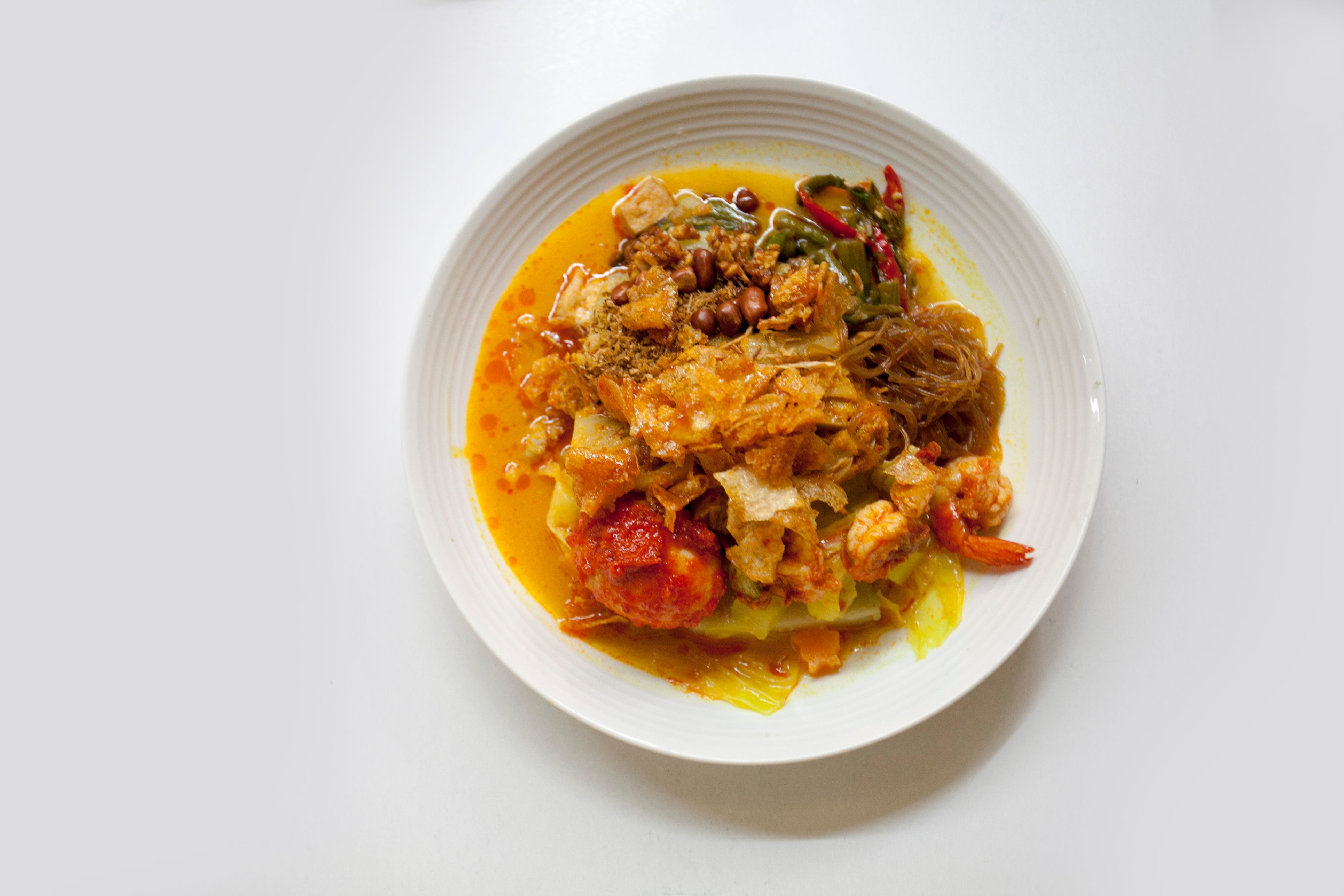
Southern curries from the tray stalls. Khao rad gaeng logic, market edition: rice with one or two curries from the trays — gaeng som, kua gling, moo hong if you're lucky. The place to taste real southern heat at market prices. Naka is the strongest hunting ground; Walking Street has good stalls too.
Roti. The crisp flatbread stretched paper-thin and fried on a big flat pan — plain with condensed milk and sugar, stuffed with banana or egg, or the savoury murtabak style with curry sauce. Roti stalls anchor the dessert end of most markets, and a good roti man at work is free theatre.
Coconut ice cream and Thai desserts. Coconut ice cream served in a coconut shell or a bread roll (yes — try it), sticky rice, coloured jellies, egg-yolk sweets, banana fritters. The dessert rows are where the Thai families finish their evening, and they're right.
Mango sticky rice. Peak when mangoes are in season, available nearly always anyway. The market version, eaten standing up with a plastic spoon, is the correct version.
O-aew, in town. Phuket's own shaved-ice dessert — a clear jelly made from o-aew seeds and banana, over ice with red syrup and kidney beans. Refreshing, mildly strange, found in and around Phuket Town, so hunt it at Walking Street and Chillva rather than the beach markets.
The bug cart — labelled honestly. The fried-insect stall (grasshoppers, crickets, silkworms, sometimes scorpions on sticks) is at most big markets, and let's be straight about what it is: a photo opportunity with snacks attached. Thais do eat some of these — silkworms with beer is a real thing — but the cart with the scorpion display exists mainly for visitors' cameras, charges accordingly, and fine: a crunchy grasshopper costs little, tastes mostly of oil and salt, and the photo is fun. Buy one, eat one, no shame either way.
How to work a market like you've done it before
Walk the full loop first. Every market punishes the person who buys a full meal at the third stall. The best stall is always further in. Do one complete lap — see what's cooking, note the queues — then start buying.
Follow the Thai queues. This is the single most reliable quality signal in Thai food. A stall with a line of locals knows something the empty stall next door doesn't. Turnover also means the food is fresh and the oil is fresh with it.
Graze in small plates. The tasting-menu approach: many stalls, small portions, shared around the table. Four people ordering one dish each from six stalls eat a banquet for the price of one beachfront dinner. If a portion looks big, that's what the plastic forks for sharing are for.
The table system. Most market food zones have shared tables with plastic stools. Claim seats first or eat as you walk — both are normal. A stall will happily bring your food to your table if you point at where you're sitting; drinks often come from a separate drinks stall, and somebody's kid may be running that route. Tissue packets and bottled water are sold at drink stalls for small change.
Carry small notes. Stalls can change a ฿1,000 note, but slowly and with visible pain. A pocket of ฿20s, ฿50s and ฿100s makes you everyone's favourite customer. Many stalls take PromptPay QR now, but Thai-market QR codes don't always play nicely with foreign banking apps — cash is still king here.
Pace the heat. Southern markets sell southern food. A curry that a stallholder describes as normal can be genuinely fierce. Order one hot dish at a time, not four, and keep the desserts in reserve as fire extinguishers.

Prices, without the fog
Market food is cheap — that's the whole point — but "cheap" deserves numbers. Typical ranges, hedged as they should be: a skewer of grilled pork or chicken runs roughly ฿10–20; satay a little more per stick set. A plate of pad thai, fried rice or noodles is typically ฿50–80. Khanom jeen with curry is one of the bargains of the south at roughly ฿40–60. Curry and rice from a tray stall lands around ฿50–80 depending on how many curries you stack. Grilled seafood is priced by size and type — a skewer or small portion from around ฿50 up, a plate of grilled prawns in the ฿150–300 zone depending on how big the prawns honestly are. Roti with banana and egg runs roughly ฿40–60; coconut ice cream around ฿40–60; mango sticky rice ฿50–100. A full, happy graze — six or seven tastes, a drink, a dessert — typically totals ฿200–400 per person at the Town markets and a bit more at Malin Plaza.
Two price notes in the interest of honesty. Walking Street charges a small premium for being beautiful and famous — dishes that cost ฿50 at Naka might be ฿70–80 on Thalang Road, and it's still a bargain, so just know it. And at seafood stalls anywhere, the rule from the wider island guide applies unchanged: agree the price before anything hits the grill, and for anything sold by weight, watch it weighed. Market stalls are mostly straight dealers feeding regulars, but the one-minute check costs nothing.
Hygiene, briefly and sensibly
Visitors worry about market food more than the evidence justifies, and the sensible rules are short. Busy is safe: a stall cooking constantly is turning over ingredients fast and cooking to order, which is what you want. Cooked in front of you beats sitting around: choose the wok and the grill over pre-cooked trays that have been waiting — the exception being curry stalls, where the pots are the format and high turnover still applies. Ice is fine: the tube-shaped ice with a hole in it, and crushed ice from bags, comes from factories using purified water — this is standard across Thailand and safe. Water for drinking is bottled, everywhere, for a few baht. Raw vegetables at khanom jeen and salad stalls are eaten by everyone, daily; rinse-wariness is a personal call, but the stalls wash produce in the same water system the whole town uses. If your stomach is new to the region, graze cooked dishes the first night and widen out from there.
A perfect market evening, start to finish
Take Sunday, since Thalang Road does it best. Get to Phuket Old Town by about 4:30–5 PM, while the light is still good and the stalls are setting up — wander the side streets first, look at the shophouses, have an o-aew to take the edge off the heat. As Walking Street fills, walk the full length once, slowly, buying nothing, and mark your stalls. Then graze uphill: khanom jeen or a small curry-and-rice to start, something grilled in the middle, a skewer of satay because you walked past it twice and it smelled that good. Sit wherever there's a free plastic stool and eat like a person with nowhere else to be, because for this hour you don't. Finish at the dessert rows — coconut ice cream, then a bag of something fried and sweet for the ride home. Total damage, typically: a few hundred baht, and a better dinner story than any restaurant on the island can give you. If your Sunday is spoken for, the same shape works at Naka on a Saturday or Malin Plaza on any night of the week — the markets change, the method doesn't.
Phuket's restaurants are good, and this site will happily guide you to them. But the island's real kitchen has always been outdoors, after dark, cooked by the skewer and the scoop. Start there.
More Phuket eating — restaurant tiers, seafood rules and the island's own dishes — is all at PhuketDining.net, and PhuketLive.com covers the rest of the island.


Comments
Post a Comment