Phuket's Bakery and Sino-Portuguese Sweet Shops
Phuket Town has a sweet tooth with an accent. Three centuries of Hokkien Chinese traders, a strong dose of Portuguese influence filtered through Macau and Malacca, and Thai ingredients underneath it all produced a bakery culture that belongs to this island alone. The old town's sweet shops are small, family-run, and easy to walk past — which would be a mistake, because this is where Phuket keeps some of its oldest recipes.
Tao sor: the pastry that defines the town
The emblem is tao sor, a flaky, mooncake-like pastry with a savoury-sweet filling — mung bean, sometimes salted egg yolk, black pepper and fried shallot in the mix. It sounds odd and eats beautifully: crumbly, fragrant, not too sweet. Families argue over which old shop makes the best, and several bakeries in the old town have been rolling them out for generations. Buy a box warm if you can; tao sor also happens to be one of the island's most traditional edible gifts, so you'll see the boxes stacked high near festivals.
Alongside it look for its cousins: wife cakes, sesame biscuits, and the whole extended family of Chinese celebration pastries that Phuket's Peranakan (Baba) community adopted as its own.

Photo: Nguyen Manh An, CC BY-SA 4.0, via Wikimedia Commons
The Portuguese fingerprint
Portugal never ruled Phuket, but its recipes arrived with traders and stayed. The clearest survivors are egg-based sweets: golden threads, egg-yolk drops and custardy cakes that echo fios de ovos and the convent sweets of Portugal, adapted to coconut and palm sugar. You'll meet them as a-pong's richer relatives at festival stalls and in the old shops as khanom with names locals rattle off quickly. Phuket's famous crepe-like a-pong — coconut, egg, cooked in a small pan over charcoal until the edges crisp — is often sold from carts near the old town in the morning, and eaten standing up, hot.
Egg tarts here lean Portuguese too: burnished tops, wobbly custard, eaten within hours of baking.
Coconut, pandan and the Thai layer
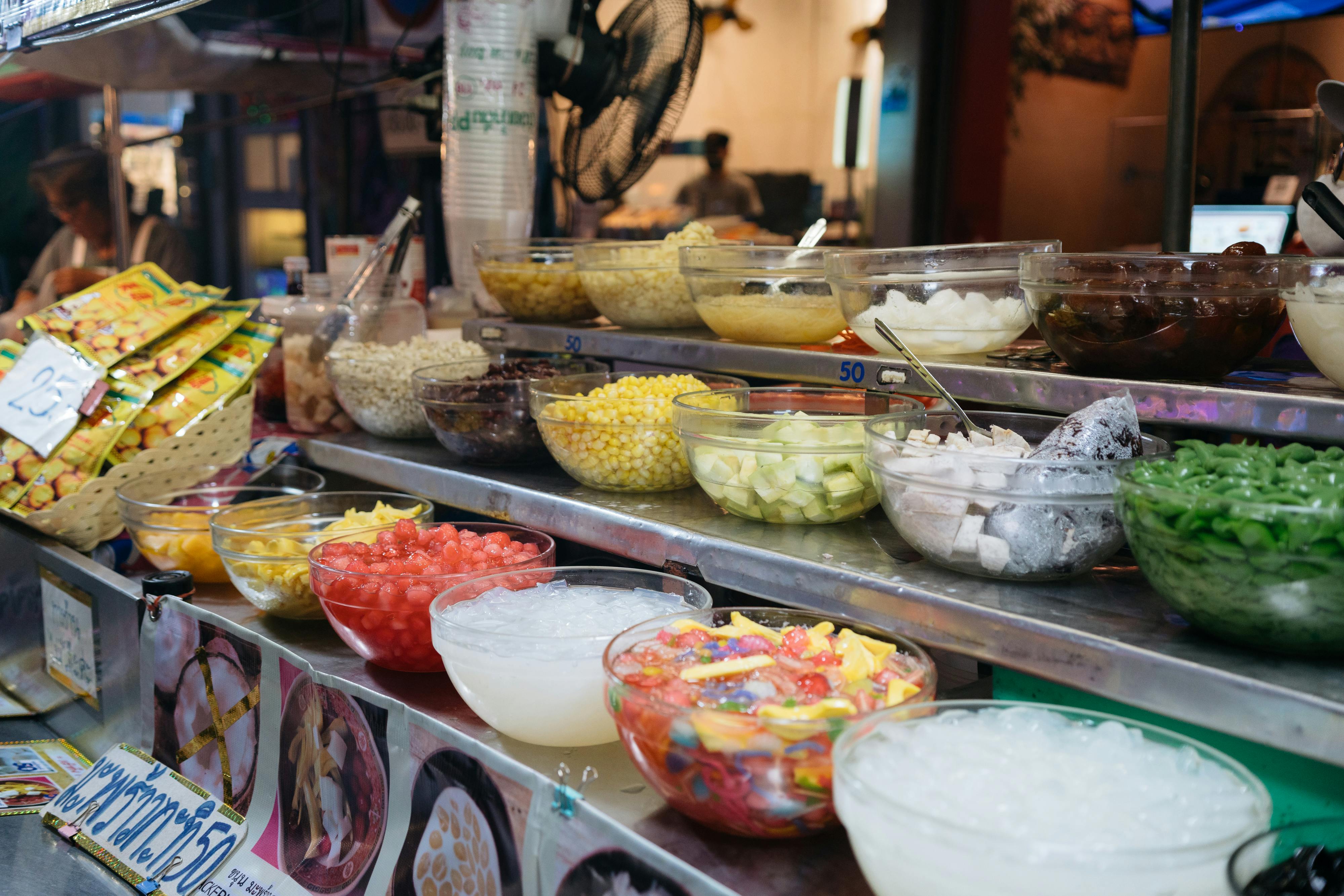
Underneath the imported traditions sits the local pantry. Coconut cream, pandan leaf, palm sugar and rice flours build the steamed cakes and jellies — layered khanom chan, coconut custards in banana-leaf cups, and the jewel-bright sweets that fill the glass cabinets of the sweet shops. Old town shops often sell both worlds side by side: tao sor in the box, steamed Thai sweets on the tray, and nobody finds the combination strange.
How to do the sweet-shop crawl
- Go in the morning. Bakeries bake early; by afternoon the best trays are empty, and the kopi shops are in their stride.
- Pair pastry with kopi. The old coffee shops pour strong, dark, sweet kopi the Hokkien way — the bitterness is built to meet tao sor halfway.
- Buy small, buy often. These are fresh goods with no preservatives; a box of six eaten today beats a box of twenty eaten sad on Thursday.
- Prices stay honest: a box of tao sor or a bag of mixed sweets typically falls in the same range as a coffee-shop breakfast — roughly a few tens of baht per item, more for gift boxes.
End the crawl at one of the old-town kopi shops with a glass of kopi, a plate of whatever the shopkeeper insists you try, and a box under your arm for later. That's not a tourist activity in Phuket Town. That's just Tuesday.
Hungry for the rest of the island's table? PhuketLive.com has the full food guides, and PhuketDining.net goes dish by dish.


Comments
Post a Comment