Phuket-Style Hokkien Mee, Explained
Ask a Phuket local to name the island's signature dish and most will say Hokkien mee before you finish the question. It's not the famous one tourists know — this is not the prawn-noodle soup of Singapore or the black, lard-heavy stir-fry of Kuala Lumpur. Phuket's version is its own bowl, born in the island's Hokkien Chinese community, and once you've had a good one, the others start to look like rough drafts.
What actually lands on the table
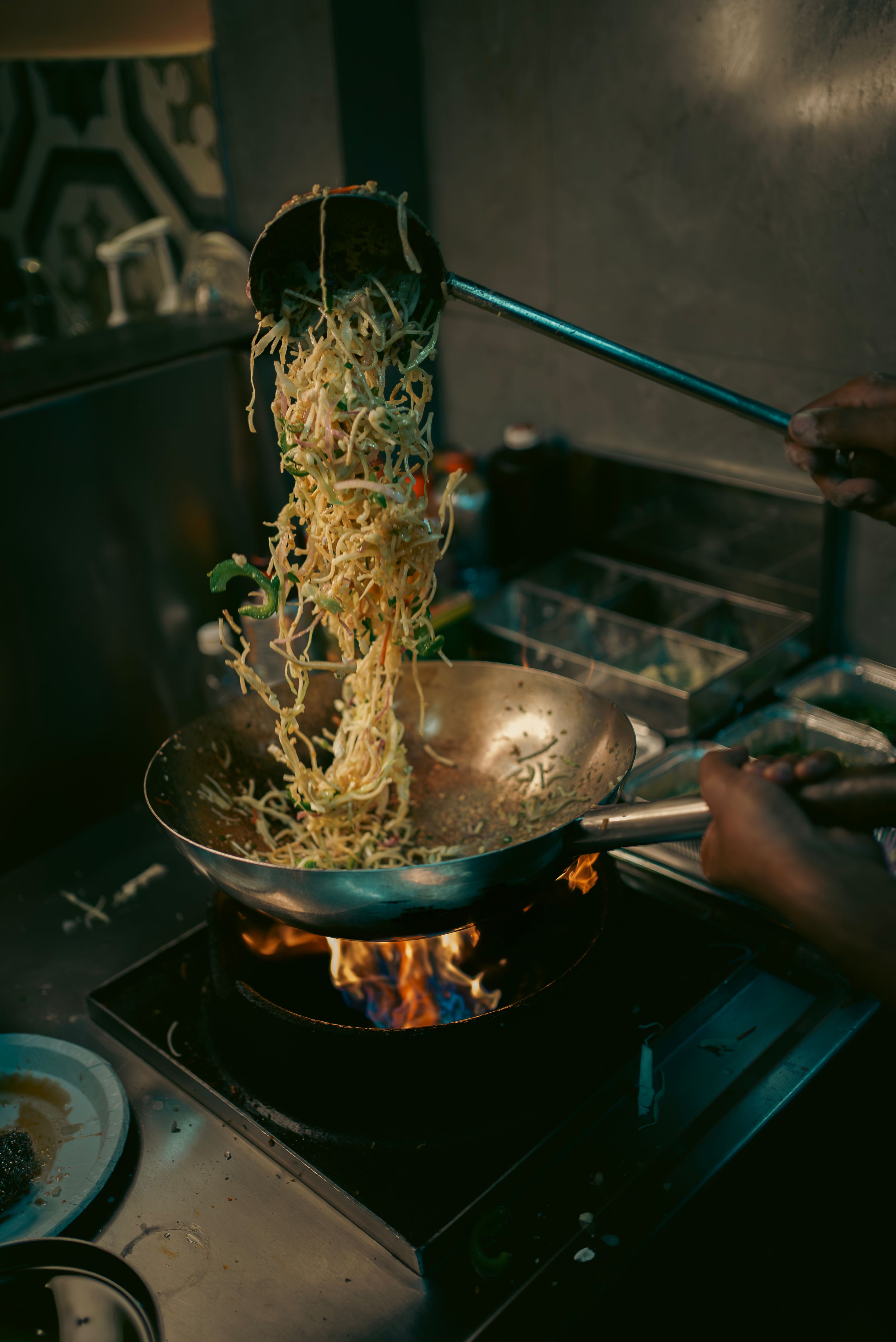
The dish starts with thick, round yellow egg noodles — chewier and more substantial than the thin noodles in most Thai soups. They're stir-fried and simmered in a dark, glossy broth built on pork and seafood stock, soy, and a deep savoury sweetness. Into the bowl goes a roll call of the sea and the farm: prawns, squid, slices of fish or fish balls, pork, and leafy morning glory or Chinese greens. Many shops crack in an egg and let it poach softly in the hot broth, so the yolk breaks and thickens everything at the last moment. A spoonful of crispy fried shallots goes on top, and a wedge of lime and chilli sit alongside for adjusting.
The word that matters is broth. A Phuket Hokkien mee is wet — not a soup exactly, but far from a dry fry. The noodles should arrive swimming in just enough dark liquid to coat every strand, and the flavour should read rich and rounded rather than salty or sweet alone.

Where it came from
Phuket's tin-mining boom drew Hokkien Chinese settlers from Fujian by way of Penang and the Straits, and they brought their noodle culture with them. Over generations the dish bent toward local tastes: the seafood got more generous (this is an island, after all), the broth picked up southern Thai depth, and the bowl settled into its current form in the shophouse noodle shops of Phuket Town. Some of the shops serving it today have been ladling the same recipe for decades, which is why locals argue about favourites the way other towns argue about football teams.
How to order it like you mean it
A standard bowl typically runs in the ฿60–120 range depending on the shop and how much seafood is in it, with special or extra-loaded versions costing more. A few practical notes:
- Egg or no egg: many shops ask, or list both — the soft egg is the classic move, take it.
- Spice: the bowl itself isn't fiery; heat comes from the chilli you add. Southern cooks keep the dried chilli flakes within reach for a reason.
- The partner dish: the same shops often do a fine rad na (noodles in thick gravy) and fried Hokkien-style dishes, so a table can share two bowls and compare.
What a good one tastes like
Balance is the whole game. The broth should taste of the sea without being fishy, carry the sweetness of stock and soy without turning sugary, and leave the noodles themselves — springy, never mushy — as the main event. The prawns should still snap. If the bowl tastes flat, the lime wedge and a pinch of chilli flakes are not decorations; they're the final seasoning, and locals use them without ceremony.
If you only eat one noodle dish on the island, make it this one — ideally at a busy shophouse in Phuket Town at lunchtime, where the queue at the counter tells you everything about the bowl before it arrives.
Hungry for the rest of the island's table? PhuketLive.com has the full food guides, and PhuketDining.net goes dish by dish.


Comments
Post a Comment