Phuket Satay and Its Peanut Sauce
In most of Thailand satay is a supporting act. In Phuket it gets top billing — and it arrives as pork. The island's Hokkien Chinese and Malay-Muslim food traditions meet on the same skewer here, and the result is a dish locals eat for breakfast, as a snack, and as the excuse for a coffee-shop sit-down at almost any hour.
Pork is the headline
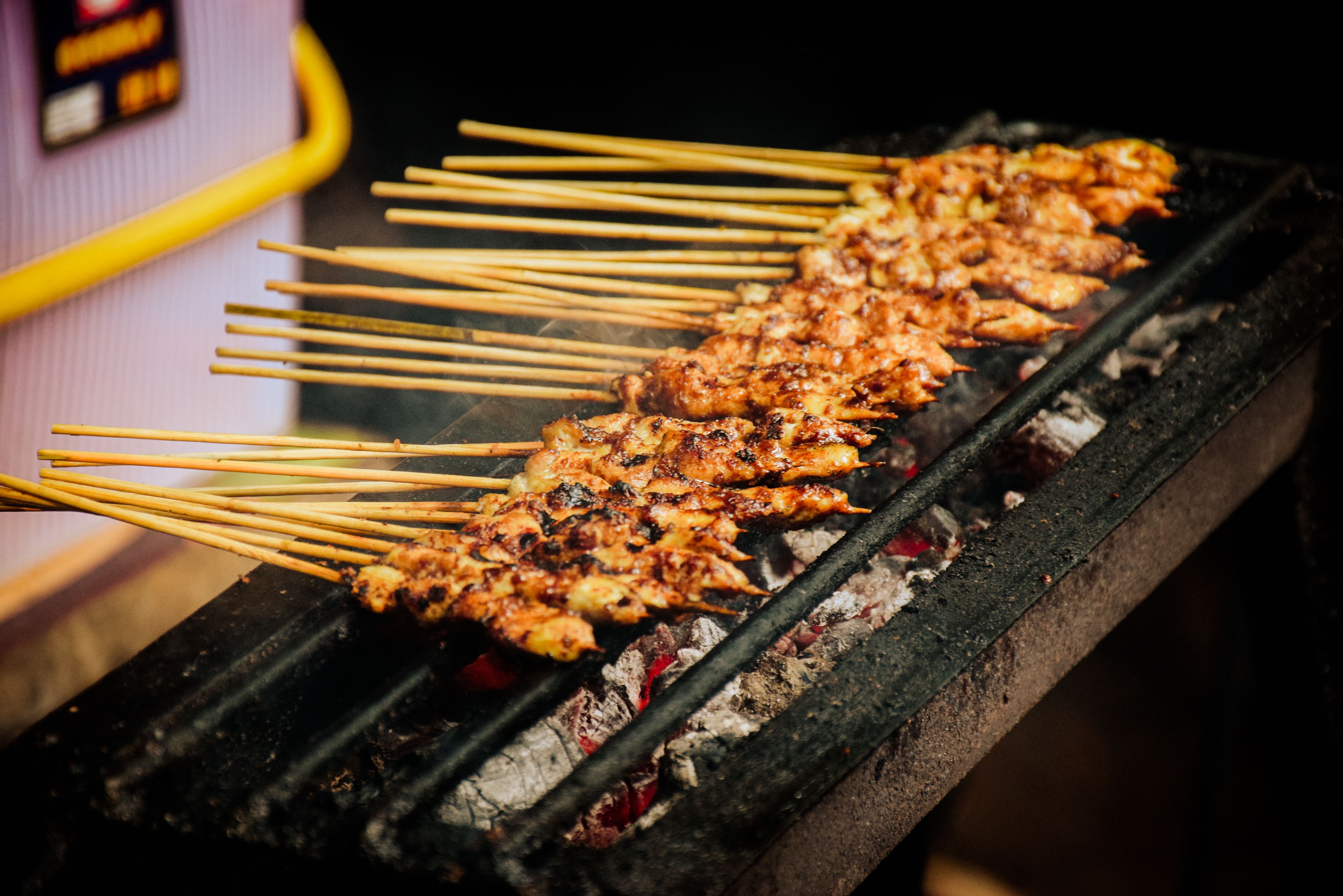
Phuket satay starts with moo satay — thin strips of pork threaded onto bamboo skewers. Chicken exists, and beef turns up at Muslim shops, but pork is the island's default and the one the old shops built their names on. The strips are cut across the grain and marinated before they ever see the grill: turmeric for the golden colour, coconut milk for richness, ground coriander and cumin for warmth, a little sugar and soy for the savoury-sweet base. The marinade does double duty — it flavours the meat and keeps it tender over fierce heat.
The grilling is fast and smoky. Skewers go over real charcoal, turned constantly, basted with coconut milk as they cook so the edges caramelise instead of drying out. A good satay cook works in a rhythm that never stops: skewers on, skewers basted, skewers off. You want char at the edges and juice in the middle, and the whole thing should take minutes, not a quarter of an hour.
The sauce is the point
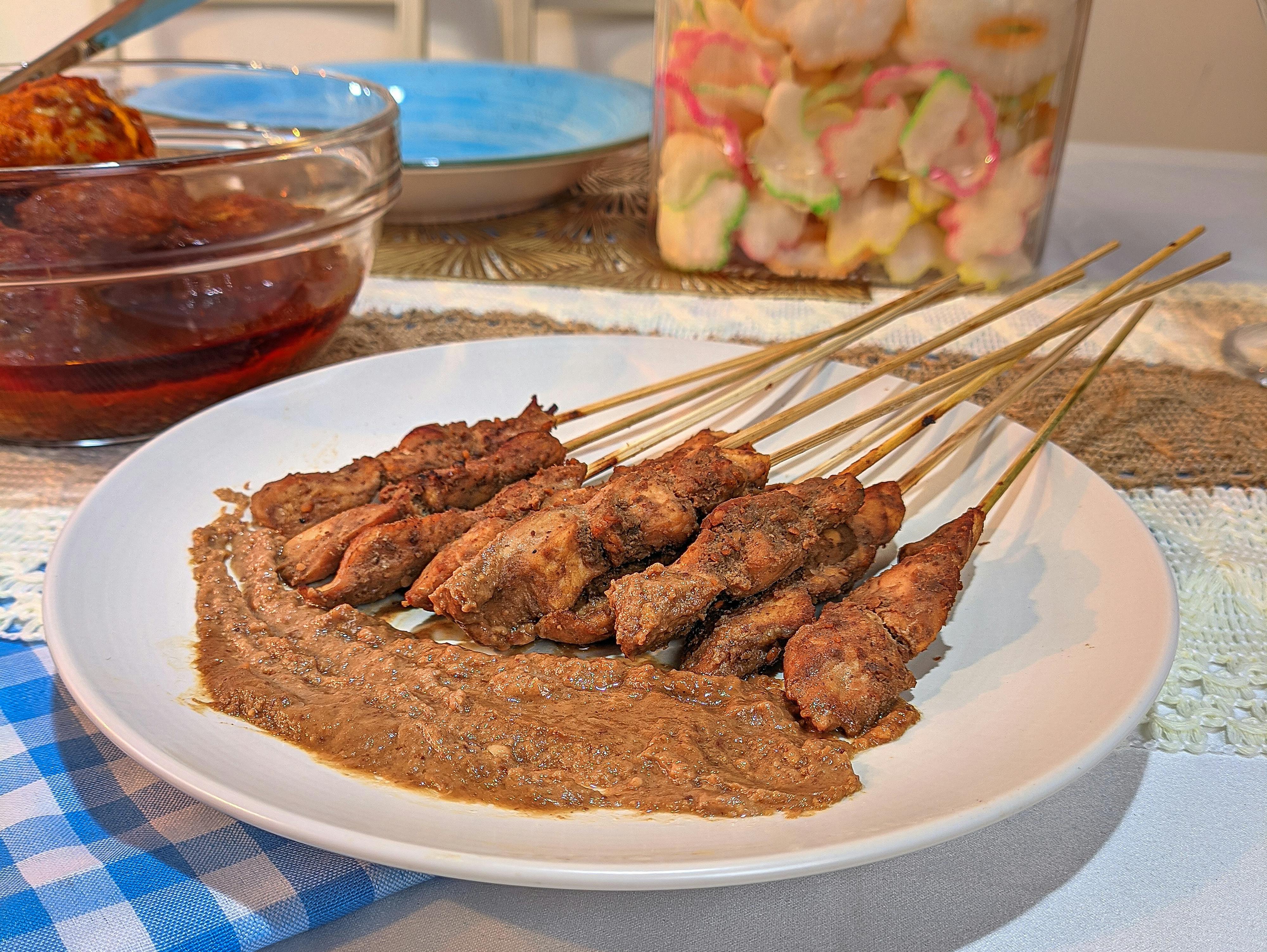
Be honest: the meat is the vehicle, the peanut sauce is the destination. Phuket-style satay sauce is thick, satiny and deeply savoury — ground roasted peanuts simmered with coconut milk and a red curry base, sweetened gently and salted properly. It should taste roasted and rich rather than sugary, with a low warmth underneath rather than real fire. Shops guard their balance fiercely; locals will drive across town for one sauce over another.
The sauce must be hot and the skewers hotter, and the correct technique is total immersion — drag the skewer through the bowl so every bite carries sauce. Nobody in Phuket dabs politely.
What arrives with it
A proper satay set comes with ajat, the quick cucumber relish: sliced cucumber, shallot and chilli in a sharp sweet-sour vinegar syrup. It looks like a garnish and works like a reset button — the acidity cuts through the fatty sauce so skewer number eight tastes as good as skewer number one. Many Phuket shops also bring slices of toasted white bread, which exist for one purpose: mopping up the sauce left in the bowl at the end. Skipping the bread is the only real mistake you can make.
How to order, and what it costs
Satay is sold by the skewer or by the set. A single skewer typically runs ฿5–10, and a satisfying set of ten with sauce and relish usually lands somewhere in the ฿60–120 range at a local shop — tourist-strip prices run higher. A few honest notes:
- Order more than you think. Skewers are small, the grill is fast, and reordering mid-meal means a fresh wait.
- Breakfast is normal. Satay with kopi at 8 a.m. is a Phuket Town institution, not a tourist novelty.
- Watch the grill, not the signboard. The best shops are the ones where the cook never stops turning skewers.

If satay back home means a dry chicken skewer and a sweet dip in a ramekin, Phuket's version will recalibrate you. This is the island's snack architecture at its best: charcoal, coconut, peanut and pork, assembled for a few baht a stick.
Hungry for the rest of the island's table? PhuketLive.com has the full food guides, and PhuketDining.net goes dish by dish.


Comments
Post a Comment