Moo Hong: Phuket's Braised Pork Belly
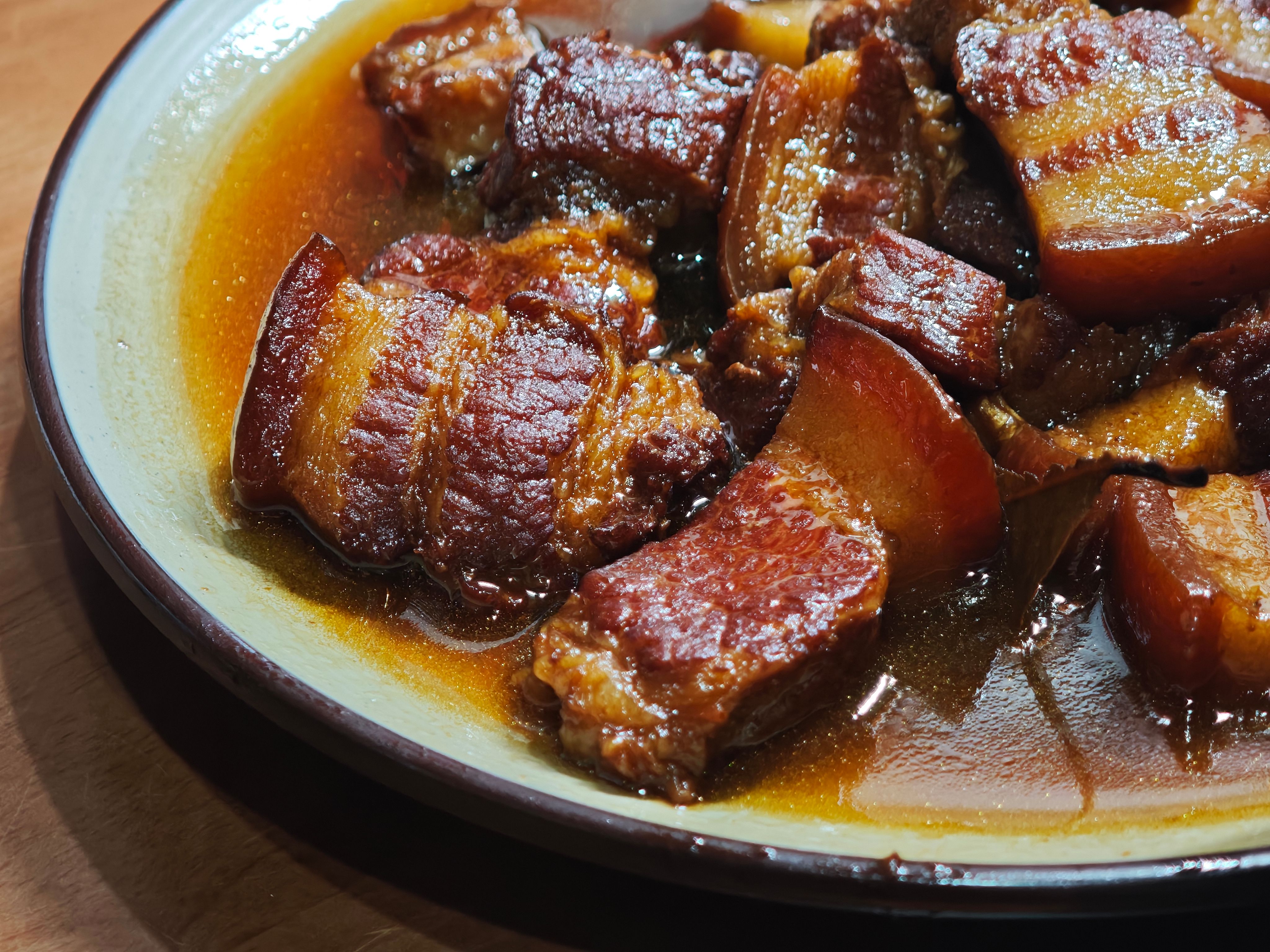
Southern Thai food has a reputation for fire, and mostly it earns it. Moo hong is the famous exception — the dish Phuket families cook when they want comfort instead of combat. Chunks of pork belly, braised low and slow in a dark, sweet soy glaze until the fat turns silky and the meat gives up at the touch of a spoon: this is the island's Baba (Peranakan) cooking at its most beloved, and the dish every Phuket grandmother is quietly judged by.
A Baba dish, through and through
Phuket's Baba community — descendants of Hokkien Chinese miners and traders who married local Thai women — built a kitchen that belongs to neither China nor Thailand alone. Moo hong is a textbook example. The technique is Chinese: pork braised in soy with warm spices. The seasoning leans local: palm sugar for a deeper, caramel sweetness, and a hand with garlic and black or white pepper that feels very much of the south. The result is dark, glossy, and fragrant, with a sauce you'd happily eat on plain rice and nothing else.
Traditionally it's a celebration and family-gathering dish — the pot that appears at weddings, Chinese New Year tables, and Sunday lunches — but in Phuket it long ago escaped the special-occasion category. Rice-and-curry shops keep a tray of it most days, and many Phuket Town restaurants list it as a house signature.
How it's made
The method is patience, not difficulty. Pork belly is cut into generous chunks — skin on, layers intact — and browned or blanched first. Then it simmers in a mixture of dark and light soy, palm sugar, garlic, and spices like star anise and cinnamon in restrained amounts, sometimes with a whisper of five-spice. Over an hour or more, the sauce reduces to a lacquer and the pork turns tender enough to cut with a spoon. Some families add hard-boiled eggs to the pot to soak up the glaze — if you see eggs in the tray, that's why, and they're excellent.
The balance to listen for: sweet first, then salt, then the warmth of pepper and spice — never candy-sweet, never one-note. The fat is the point, but it should taste rich, not greasy, because the long braise renders it into the sauce.
How to eat it
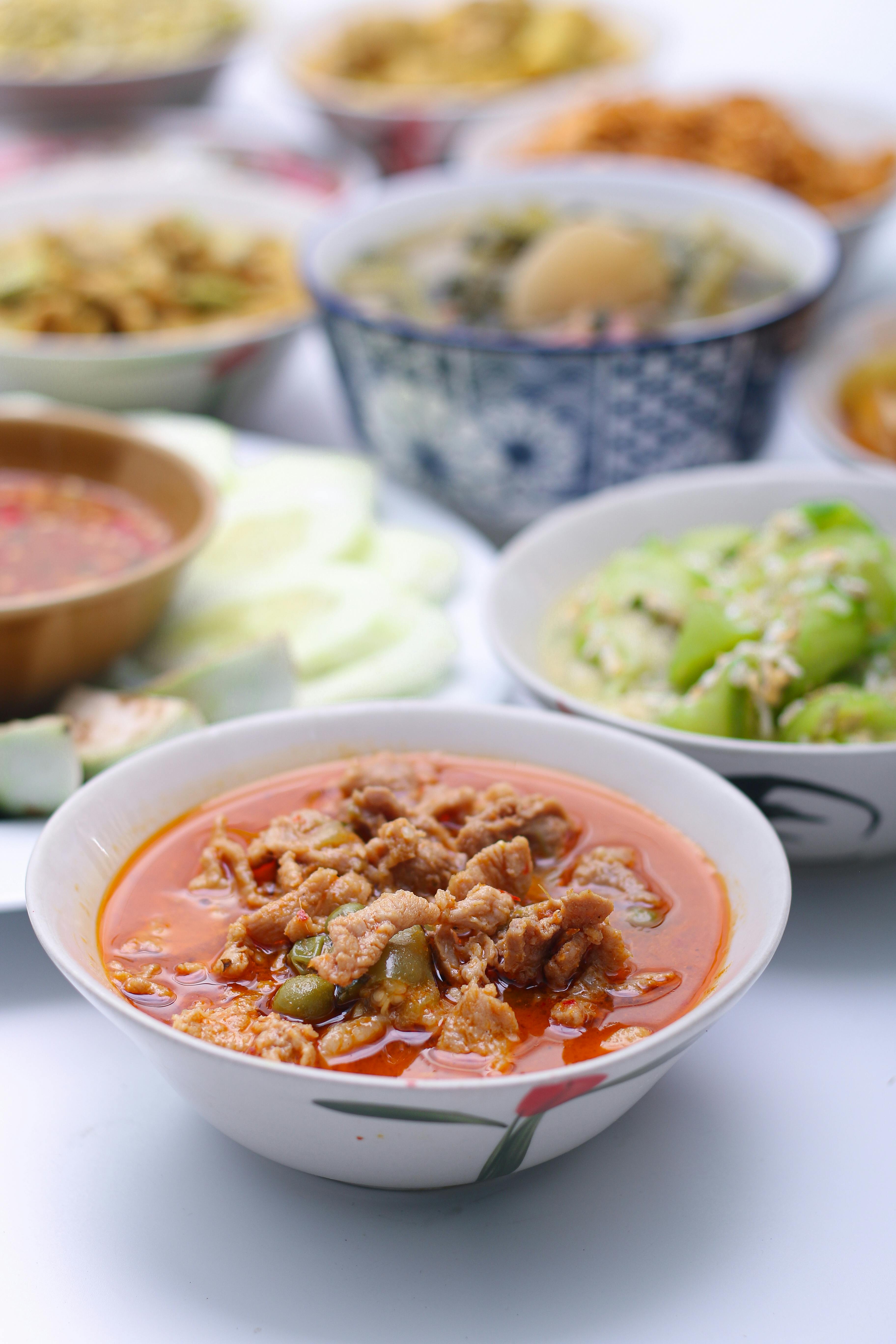
Moo hong is built for khao rad gaeng — the rice-and-curry tray format. Order it over jasmine rice with one fiery southern dish beside it, and you have the classic Phuket plate: fire and comfort in rotation, the pork's sweetness resetting your palate between bites of something that bites back. A typical serving in a rice shop or local restaurant usually runs around ฿80–180 depending on the place and portion, often as part of a rice plate.
A few eating notes from the local playbook:
- Take the sauce seriously. Spoon it over the rice; that's where the cooking went.
- Pair it hot-and-sweet. Locals match it with gaeng som or another sour-fiery dish deliberately.
- Eat the egg if there is one. It's been bathing in the glaze longer than the pork has.
Finding a good one
Phuket Town is the heartland — the Baba restaurants and old rice shops there are where the dish is taken most seriously. In the beach towns it appears on better Thai menus, but quality varies; the giveaway of a good version is the sauce's shine and the pork's patience. If it arrives fast and pale, it wasn't braised, it was rushed. The real thing can't be hurried, and that's rather the point of it.
More Phuket dishes, explained one at a time, live on PhuketDining.net — and the island-wide guides are on PhuketLive.com.


Comments
Post a Comment