Mango Sticky Rice, Done Right
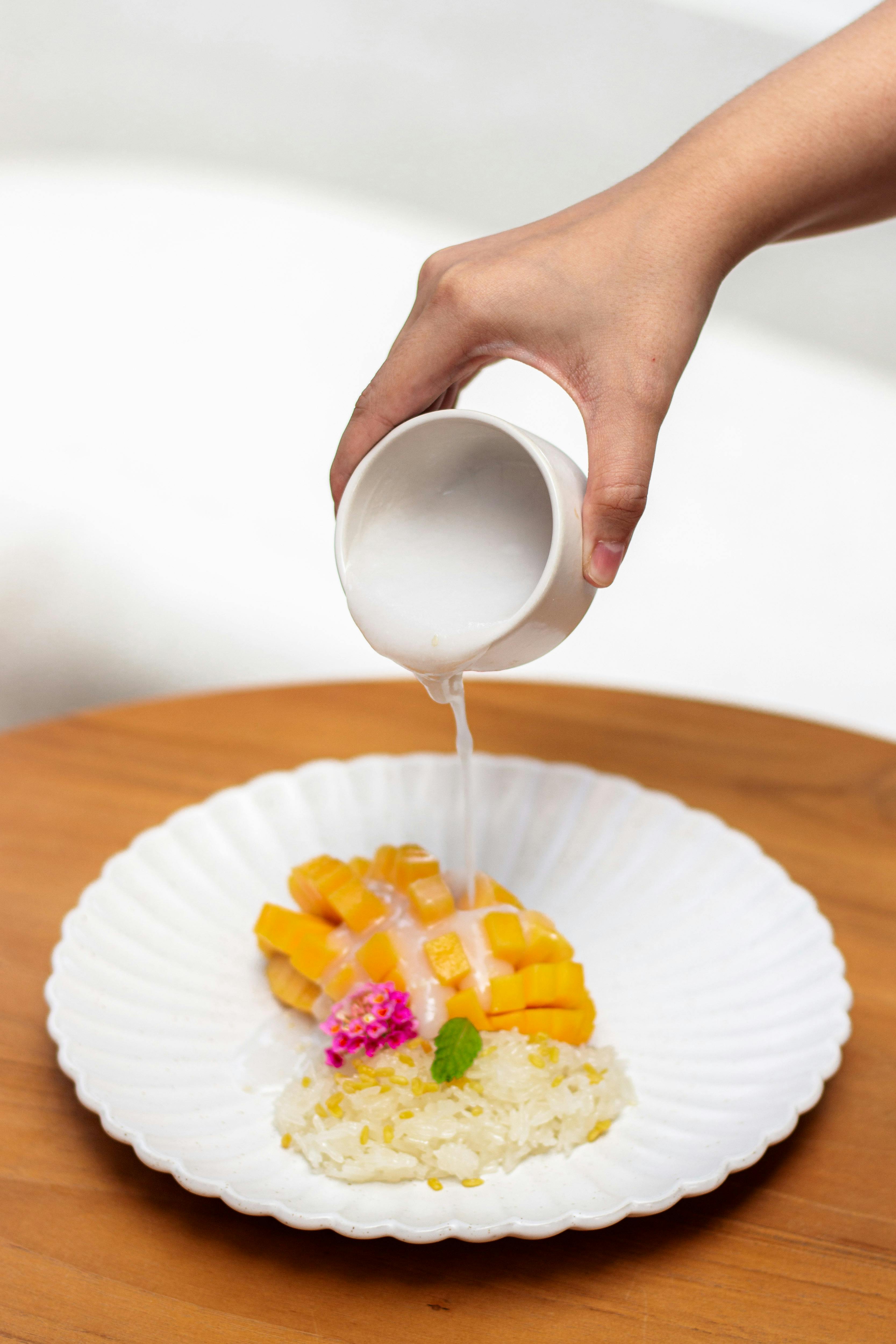
Mango sticky rice — khao niao mamuang — is three things on a plate: ripe mango, coconut sticky rice, and a drizzle of salted coconut cream. That's all. And because that's all, every shortcut shows. The disappointing versions tourists eat at airport cafés have given a great dish a mediocre name; eaten properly, in mango season, from someone who cares, it's one of the finest desserts in Thailand.
The rice is cooked, not boiled
The base is glutinous rice — the same sticky rice family that anchors the Lao and Isan table — soaked for hours, then steamed, never boiled, so the grains stay separate and glossy. While still hot it's folded with coconut milk sweetened with sugar and, crucially, salt. That seasoning is the whole dish in miniature: the rice should taste sweet and rich with a savoury depth underneath, so it stands up to the fruit instead of melting into pudding. Done well, each grain holds its shape and shines; done badly, it's a warm sweet mush, and no mango can save it.
The finishing drizzle is a second, thicker coconut cream, salted a touch more boldly, spooned over at serving. A scatter of toasted mung beans or sesame seeds adds the one crunch the plate has.
The mango makes or breaks it
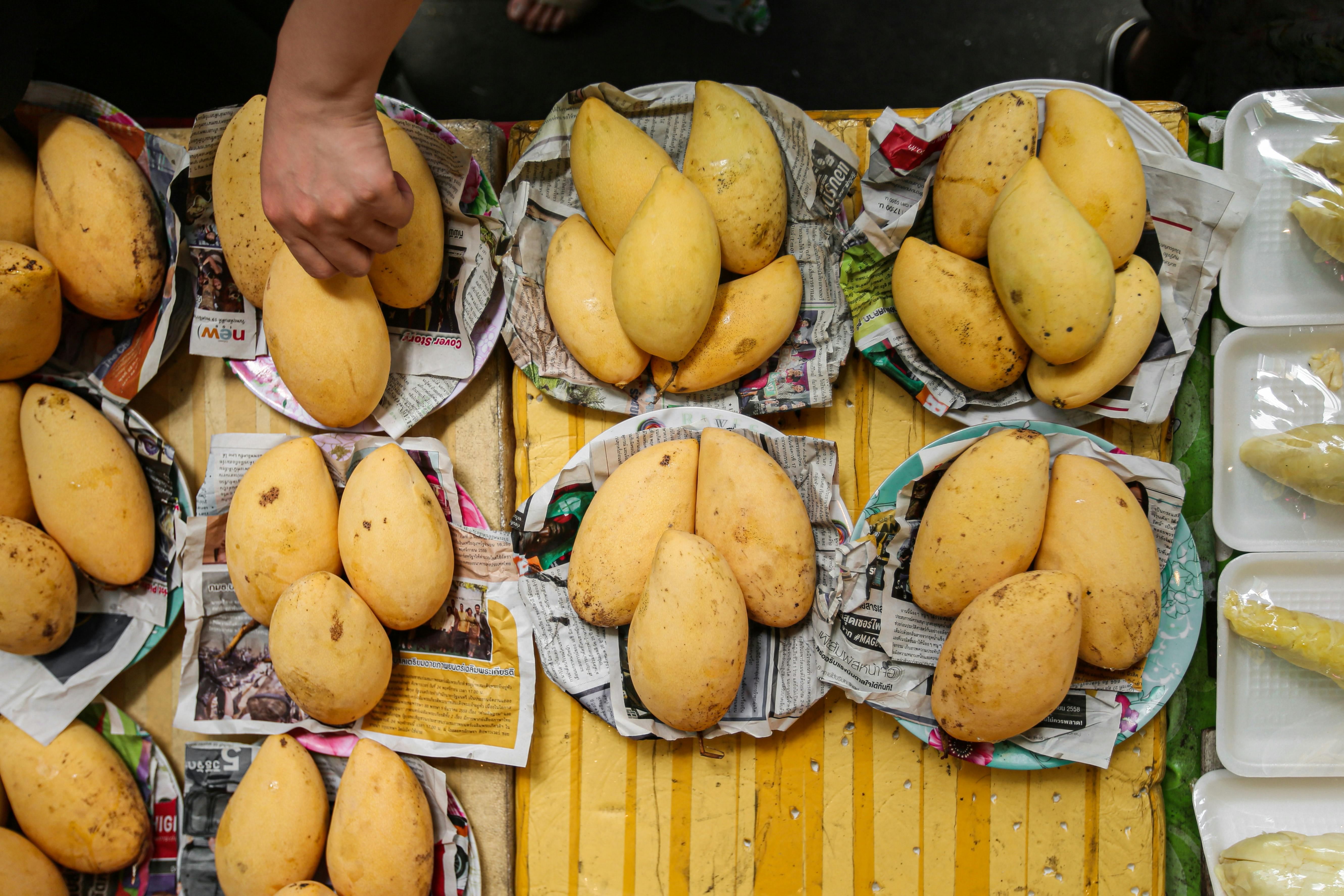
Thailand's dessert mangoes are bred for this plate. Nam Dok Mai is the famous one — honey-sweet, silky, almost fibreless, fragrant enough to smell through the skin. Ok Rong is the older local favourite, slightly more aromatic and complex, the connoisseur's pick where it still appears. What matters more than the variety's name is the ripeness: the mango should yield to a gentle press, smell sweet at the stem, and slice into deep orange, unstringy flesh. A pale, crunchy mango on good rice is a wasted plate.
This is why mango sticky rice is a seasonal dish wearing an all-year disguise. Peak mango season runs roughly March to June, and that's when the dessert sings. Good stalls serve it year-round with fruit of varying quality — in season, eat it twice a day without guilt.
How to spot the good version in Phuket
- The rice glistens and separates. If it looks like porridge, walk on.
- They slice the mango to order. Pre-sliced fruit drying under plastic is a warning.
- The cream is warm or room temperature, poured at the table or counter, not lacquered on in advance.
- Markets beat beach strips. In Phuket, the dessert stalls at fresh markets and outside local restaurants do the honest version; expect to pay roughly ฿60–120 depending on the mango and the setting, with premium fruit in season at the top of that range — still one of the cheapest great desserts on the island.

Eat it the moment it lands, while the rice is still warm against the cool fruit, and eat the components together — rice, mango and cream in every spoonful, never in courses. Three ingredients, a thousand years of Thai kitchen logic, and one non-negotiable rule: it lives and dies by the mango.
Hungry for the rest of the island's table? PhuketLive.com has the full food guides, and PhuketDining.net goes dish by dish.


Comments
Post a Comment