Eating in Patong: The Complete Guide On and Behind Beach Road
Patong gets written off as a food town by people who never leave the beach road — and the beach road, to be fair, does its best to confirm their opinion. But Patong is also a real Thai town of workers, families and long-stay residents stacked up behind the resort strip, and that town eats well and cheaply. The trick to eating in Patong is understanding that you're really dealing with three different towns at three different price levels, all within a ten-minute walk of each other. There's the beach road, where you pay for the sunset. There's the middle town along Rat-U-Thit Road and its side sois, where the choice widens and the prices soften. And there are the back streets — above all Nanai Road — where Patong's own people eat, and where a full Thai dinner can cost less than a beach-road cocktail. This guide walks all three, plus the two markets that tie them together, and gives you an honest price ladder at the end so you can plan a day of eating without a single surprise bill.

The beach road: seafood displays, touts and the sunset tax
Thawewong Road — the beach road — runs the length of Patong Bay, and its restaurant row is built around one theatrical device: the seafood display. Crushed ice, a fan of tiger prawns, whole snapper and red grouper, squid, crab and lobster arranged like jewellery, and a tout at the kerb with a menu and a smile, inviting you in. It looks wonderful. Some of it is genuinely good. All of it is priced for the view, and the view is what you're really buying — a table across from the sand, the sun going down over the bay, waiters crossing the road with trays. As long as you know you're paying a sunset tax of roughly double the back-street price, you can enjoy the beach road for what it is and occasionally eat very well on it.
How to pick a good one: choose busy over beautiful. A beach-road place with thirty tables full at 7 PM is turning its seafood over daily; an empty one with the most elaborate display on the strip is displaying the same fish to fewer and fewer people. Look at the ice — the fish should be buried in plenty of it, eyes clear, smelling of the sea and nothing else. Walk the display but order from the full menu too: the beach-road kitchens all do the Thai standards (tom yum, green curry, morning glory in oyster sauce) and a place that cooks those properly usually handles a grilled fish properly.
Two rules protect your wallet here. First, seafood is sold by weight: the price on the menu is per 100 grams or per kilo, not per fish, and the time to confirm the total is before anything goes on the scales, not when the bill arrives. Ask the price per kilo, watch the weighing, agree the cooking style, then sit down and relax — a good place will do all of this cheerfully and in the open. Second, check whether the menu prices carry "++" (plus VAT, plus service). On the beach road they often do, and a bill that lands 17 percent above the menu total is a nasty way to end a sunset. None of this is a scam unique to Patong — it's beachfront dining everywhere on earth — but Patong's version is famous enough that going in with your eyes open turns it from a trap into a choice.
One more honest note: the touts are not a warning sign by themselves. Touting is simply how the beach road competes — every place does it, good and bad alike. Judge the fish, the crowd and the price transparency, not the enthusiasm of the man at the kerb.
The middle town: Rat-U-Thit and the side sois
One street back runs Rat-U-Thit 200 Pee Road — the town's main artery — and this is where Patong starts feeding people who live here as well as people passing through. The big anchors sit here: the Jungceylon mall with its food court and chain restaurants (useful, air-conditioned, predictable), the boxing stadium, and blocks of mid-range restaurants covering every cuisine the resort crowd asks for. Prices on Rat-U-Thit typically run a third below the beach road for comparable food, and the Thai restaurants in particular improve noticeably — this is where hotel staff eat on their way home, and kitchens that feed staff don't survive on scenery.
The side sois running between Rat-U-Thit and the beach road are the interesting layer. Wander them at dinner time and you'll find the pattern of every Thai resort town: small Thai kitchens with plastic chairs and handwritten specials, a barbecue place doing grilled chicken and som tam for the neighbourhood, noodle shops that have been in the same shophouse for years. The rule from our island-wide guide applies perfectly here: the further your table is from the beach, the better the ratio of food to rent — and in Patong that gradient plays out over about four hundred metres. A soi restaurant five minutes' walk from the sand will feed you the same dishes for noticeably less, cooked for a more local crowd.
The middle town is also where Patong's food courts quietly shine. The basement food court at Jungceylon and the one at the Central Patong mall run the standard system — load a card or scan QR at the desk, spend it stall by stall, refund the balance — at prices barely above street level, in air-conditioning, with spotless trays and no guesswork. On a 34-degree day with tired kids, this is not a compromise. It's strategy.
The back streets: Nanai Road and Patong's real kitchen
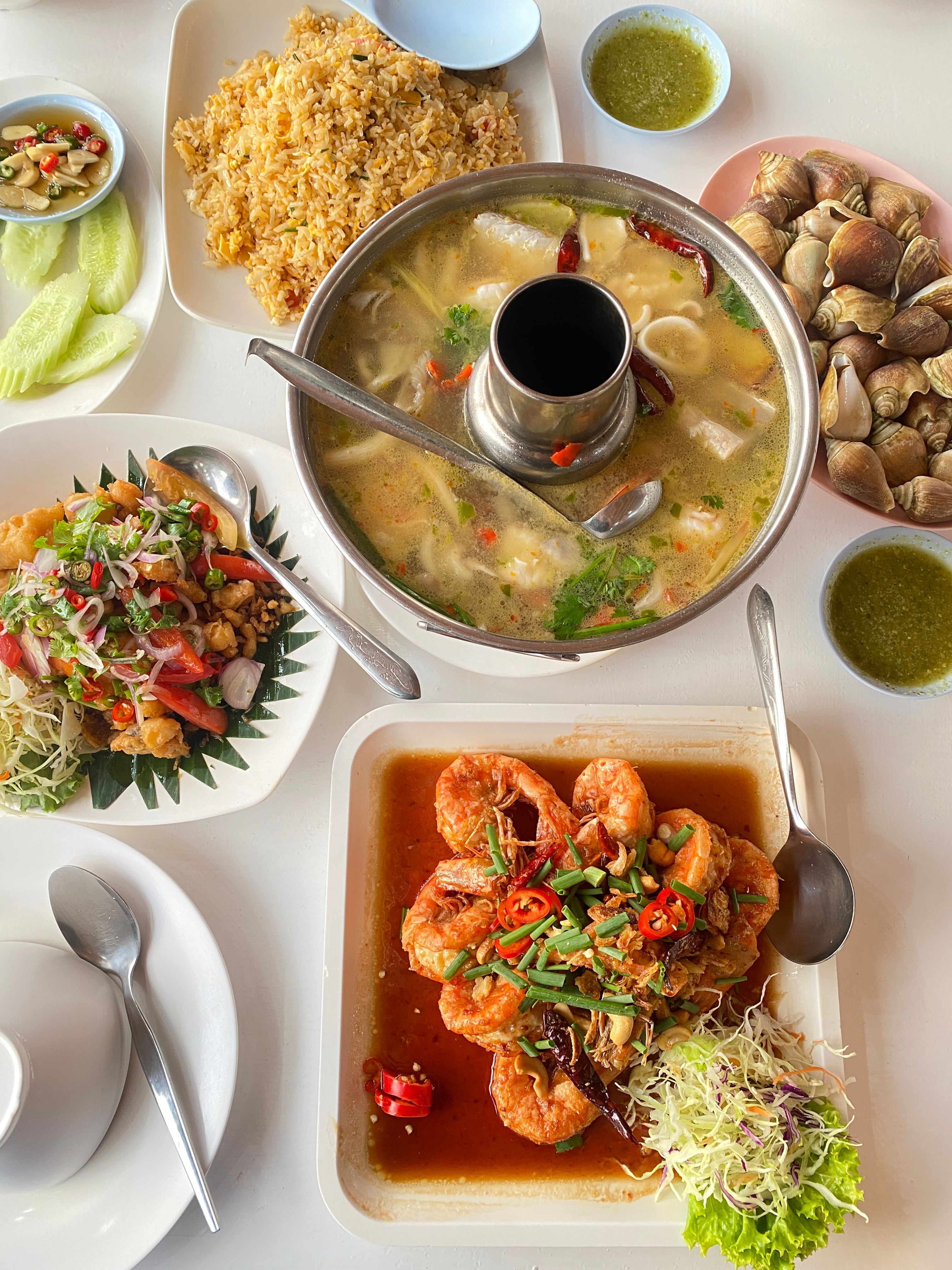
Keep walking east and uphill, past Rat-U-Thit, and you reach Nanai Road — the long residential street that curves along the foot of the hills behind the town. This is the third Patong, and for food it's the best one. Nanai is where the long-stay visitors, dive instructors, bar staff, massage therapists and Thai families who run Patong actually live, and its restaurant row is priced for them: small Thai kitchens, Isan places doing som tam and grilled chicken the fiery way, noodle shops, curry-over-rice counters, a handful of expat-run cafés and bakeries, and fruit shakes at local prices. A main dish that costs ฿250 on the beach road costs around ฿80–120 here, and it frequently tastes better, because a Nanai kitchen that cooks badly loses its neighbours, not just a tourist who was flying home anyway.
Nanai works by the local clock. Breakfast is early and Thai — jok (rice porridge), khanom jeen with curry, roti, strong coffee. Lunch is the curry counters and noodle shops at full roar. The evening brings the grills out and the beer gardens fill with people finishing work. Nothing on Nanai is dressed up, English is patchier (a translation app and a smile cover it), and menus with photos do most of the talking. Cash and PromptPay QR are the norm. If you eat one dinner behind the strip during your stay, eat it here — it's the meal that recalibrates what you think Patong food costs.
Banzaan Market: buy it downstairs, cook it upstairs
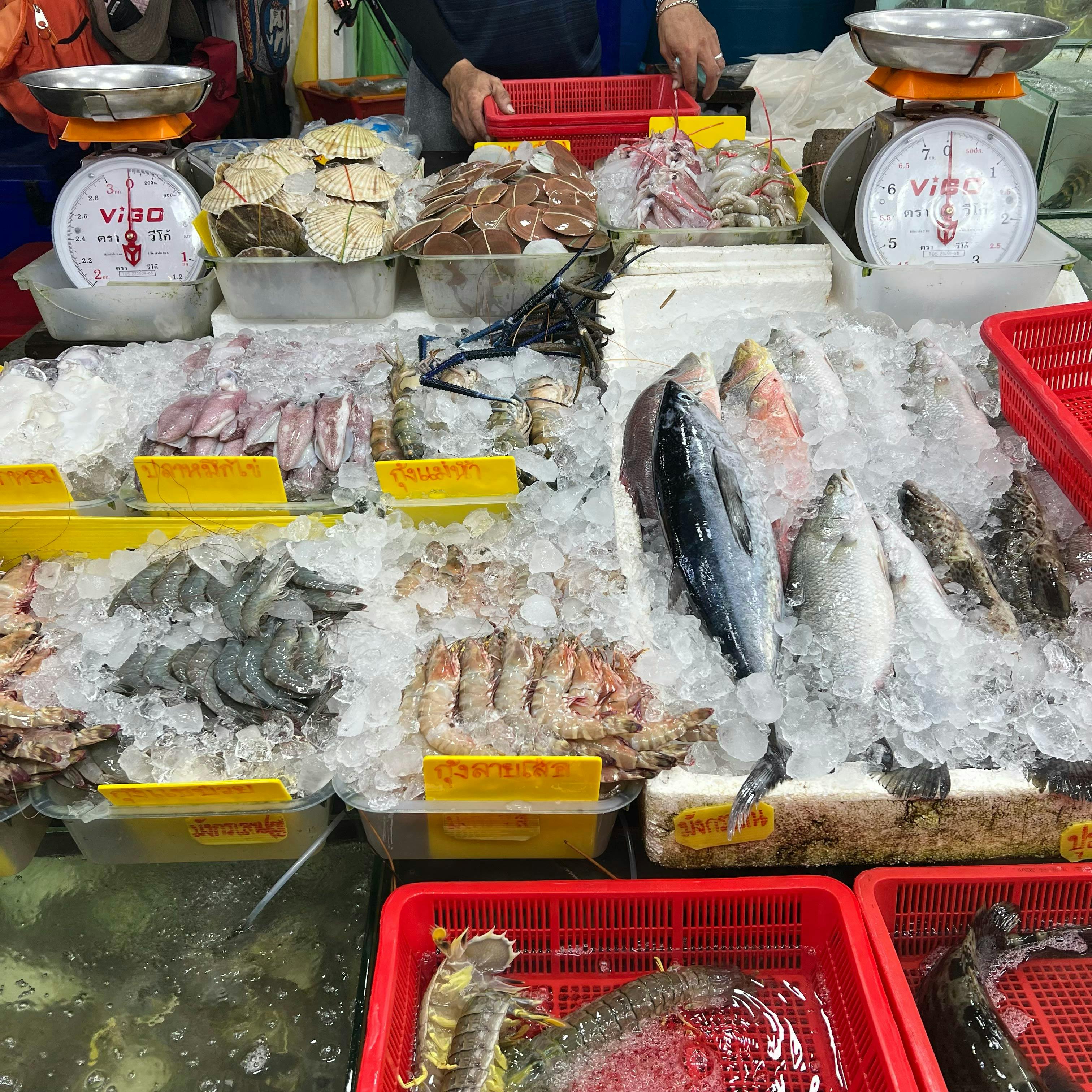
A short walk north of Jungceylon, behind the beach-road blocks, sits Banzaan — Patong's fresh market — and inside it is the single best seafood strategy in town. The ground floor is a proper working wet market: fish, prawns, squid, crab and shellfish on ice, sold by weight at market prices to the people who cook for Patong. Upstairs is a clean, bright food court of stalls, and several of them will cook seafood you bring up — the famous "you buy, we cook" arrangement that Rawai is known for, transplanted into the middle of Patong.
Here's how it works. Downstairs, choose your seafood and agree the price per kilo before it's weighed — the market stalls are used to visitors, prices are displayed or quickly quoted, and a kilo of good prawns plus a fish will typically cost you about what one beach-road seafood dish costs. Carry your bags upstairs, pick a cooking stall (the ones with the longest queue of locals carrying market bags know the drill), and hand it over with your choices: grilled with garlic, steamed with lime and chilli, stir-fried with curry powder, in a tom yum. The cooking fee runs roughly ฿100–200 per dish or per kilo depending on the style — steaming is cheapest, elaborate stir-fries cost a little more — and you order rice, vegetables and drinks from the same stall or its neighbours while you wait, usually fifteen to twenty minutes. The total for a genuine seafood feast for two, bought and cooked this way, typically lands around half to two-thirds of the beach-road equivalent, and the fish was swimming more recently.
The rest of Banzaan is worth the trip on its own. The upstairs stalls do the full Thai repertoire at food-court prices — pad thai, noodle soups, rice dishes, Phuket's o-tao oyster omelette when it's on — and downstairs sells fruit by the kilo at town prices, which matters if you've been paying beach-road prices for mango. Go in the morning for the market at its fullest or late afternoon when the day's catch is in and the upstairs is warming up. Bring small notes; the market is a cash-and-QR world.
Malin Plaza: the cheap-eats night market
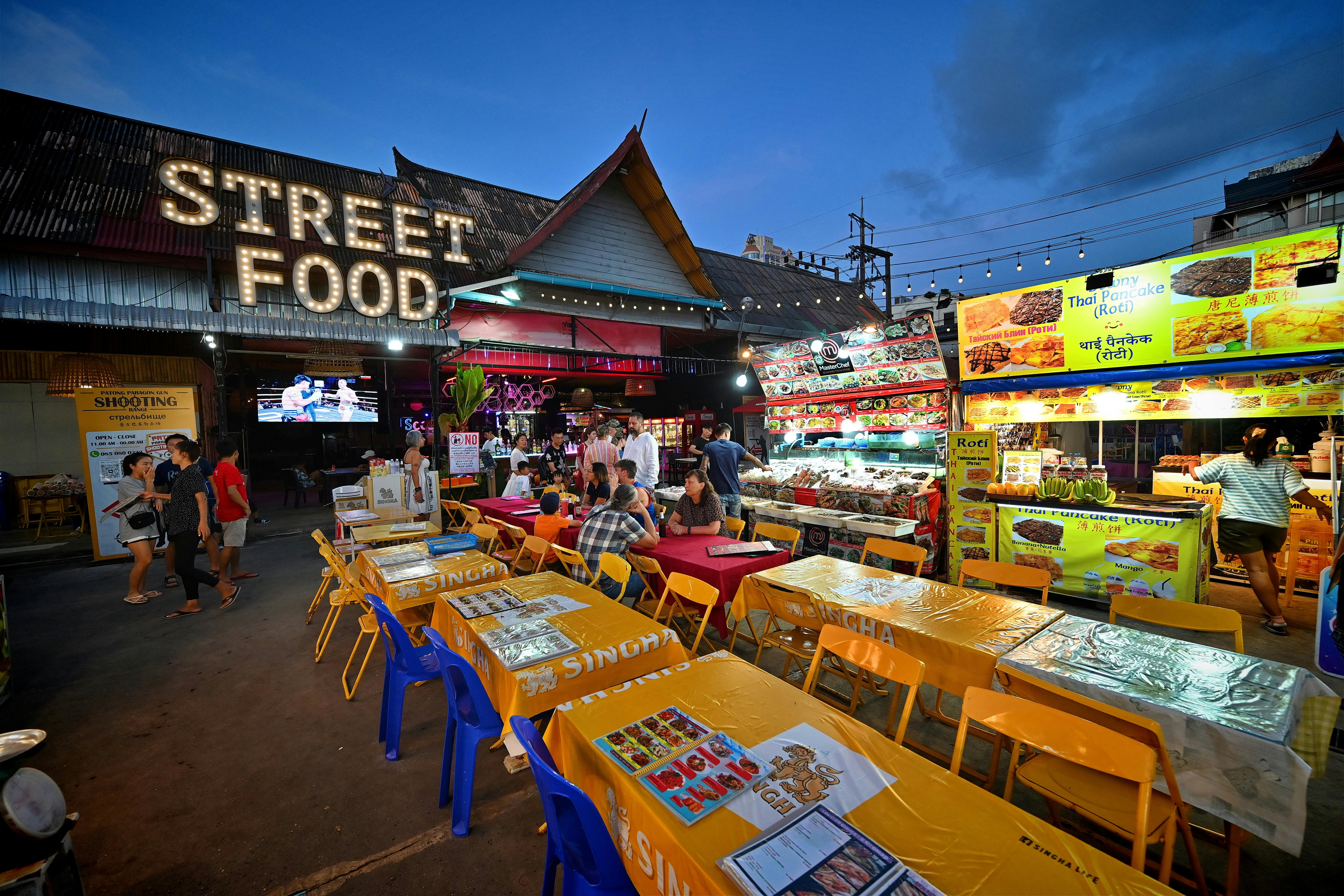
At the south end of town, on Prachanukhro Road near the beach road's end, Malin Plaza is Patong's famous night market — and the one place where the tourist town and local prices fully overlap. From late afternoon until late, the plaza fills with stalls: grilled seafood and meat skewers, pad thai and noodle soups cooked to order, sushi rows, roti and pancake carts, fruit shakes, coconut ice cream, and the full carnival of market snacks at prices that make beach-road diners wince — most dishes around ฿60–150, with whole grilled fish and seafood plates at the top end.
Malin is not refined, and that's the point. You graze: a skewer here, a plate there, a shake to carry, something sweet to finish, sitting at the shared tables in the middle with everyone else's dinner envy to guide your next round. It opens in the late afternoon and peaks after dark, making it the natural move on the way to or from an evening out — and the cheapest full dinner in Patong that still feels like an event. Quality varies stall to stall, as at every market, so use the market rule: busy stall, fast turnover, food cooked in front of you. Walk the whole plaza once before buying; the back rows hide some of the best grills.
The international table: everything, at every quality
Patong may be the most internationally catered town of its size in Asia. Decades of visitors have built a full parallel food scene: Indian restaurants from quick curry houses to proper tandoori kitchens (Patong's Indian food is a genuine strength — the town serves a huge Indian and Middle Eastern visitor base year-round), halal restaurants and kebab stands, Italian places ranging from pizza counters to serious trattorias, steakhouses, Irish pubs doing Sunday roasts, Russian and Scandinavian menus, Japanese and Korean, burger joints, and more espresso per square metre than some European capitals. If a cuisine exists, someone in Patong is cooking it.
Quality varies wildly and price is only a rough guide, so judge like a local. A full dining room of the cuisine's own nationals is the strongest signal in town — Indian families in the Indian place, Italians in the trattoria. Menu size cuts the other way: the kitchen doing forty dishes from six countries does none of them brilliantly, while the one doing twelve does them nightly. And for anything expensive, recent reviews matter more here than anywhere, because Patong's churn is fast — places change owners, chefs and names constantly, and a recommendation from three years ago may describe a restaurant that no longer exists inside the same sign. Expect to pay mid-range money for the good international tier: roughly ฿400–900 per person at the solid sit-down places, more at the steakhouses and the beachfront names, less at the curry houses and counters.
Breakfast beyond the buffet, and eating after Bangla
Hotel breakfast buffets are fine exactly once. After that, Patong's mornings are better spent the local way. Thai breakfast in Patong means jok with a soft egg and ginger, khanom jeen at a morning stall, roti with curry and sweet tea at the Muslim shops, or dim sum baskets at the town's Chinese breakfast spots — most of it done by 10 AM and costing less than the hotel's coffee. The Western morning is covered too: cafés along Nanai and the middle town do full cooked breakfasts, good coffee and bakery goods at half the resort price, and the fruit stalls will build you a breakfast of mango, pineapple and coconut for pocket change.
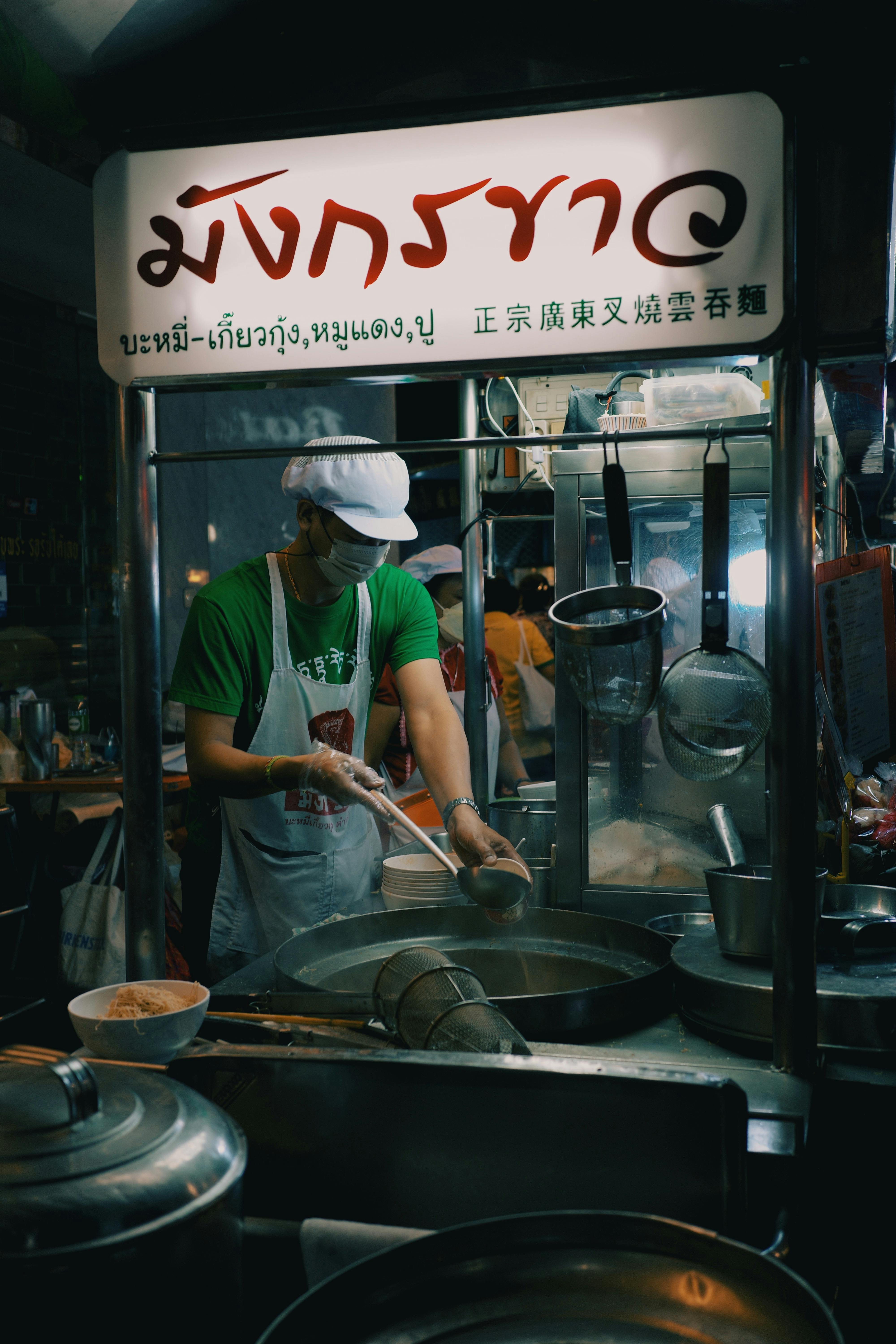
At the other end of the night, Patong eats late like nowhere else on the island. When Bangla Road is in full swing and after it closes, the town's late kitchens take over: noodle soup and rice shops around the nightlife streets running into the small hours, kebab and burger stands doing their best trade of the day at 2 AM, Malin Plaza's last rounds, and the 24-hour convenience stores as everyone's final stop. A bowl of noodle soup at the end of a Bangla night is a Patong institution and sound strategy — eat where the staff of the bars eat when their shifts end, which is easy to spot and never the place with the loudest tout.
The honest price ladder: a day of eating in Patong
Putting numbers on it, with the usual warning that these are typical hedged ranges, not quotes. The local way (about ฿400–700 a day): market or café breakfast for ฿60–120, a Nanai or food-court lunch for ฿80–150, a Malin Plaza graze or back-street dinner for ฿150–300, shakes and snacks along the way. The mixed way (about ฿900–1,800 a day): a sit-down breakfast, a mid-range lunch on Rat-U-Thit, a Banzaan buy-and-cook seafood dinner or a solid international restaurant, a drink with the sunset. The beach-road way (about ฿2,500 a day and up): hotel breakfast, beachfront lunch, and a beach-road seafood dinner with wine at sunset prices — enjoyable, photogenic, and roughly four times the local day for food that is sometimes better and sometimes simply nearer the sea. Most happy eaters in Patong mix all three: local breakfasts, market dinners, one or two splurges where the view earns it.
Stay in Patong, eat everywhere
The food argument for basing yourself in Patong is stronger than its reputation suggests. Every tier in this guide sits within walking distance of the town's condos and hotels — beach-road splurge, market feast, Nanai local dinner, late-night noodles — and the rest of the island's food map (Phuket Town's shophouses, Rawai's seafood ritual) is a day trip from your door rather than a relocation. Stay in Patong, eat across all three of its towns-within-the-town, and confirm the price before the fish is weighed. That's the whole secret, and it was never really a secret — it's just behind Beach Road.


Comments
Post a Comment