A Field Guide to Thai Desserts in Phuket
Thai dessert — khanom wan — is a world that runs parallel to the famous savoury food, and most visitors only ever meet one dish from it. Mango sticky rice is lovely, but it's the tip of a very sweet iceberg. Phuket, with its Hokkien Chinese, Malay and Thai traditions layered over each other, is one of the best places in the country to explore the rest. Here's how to read a dessert stall like you know what you're doing.
The coconut family
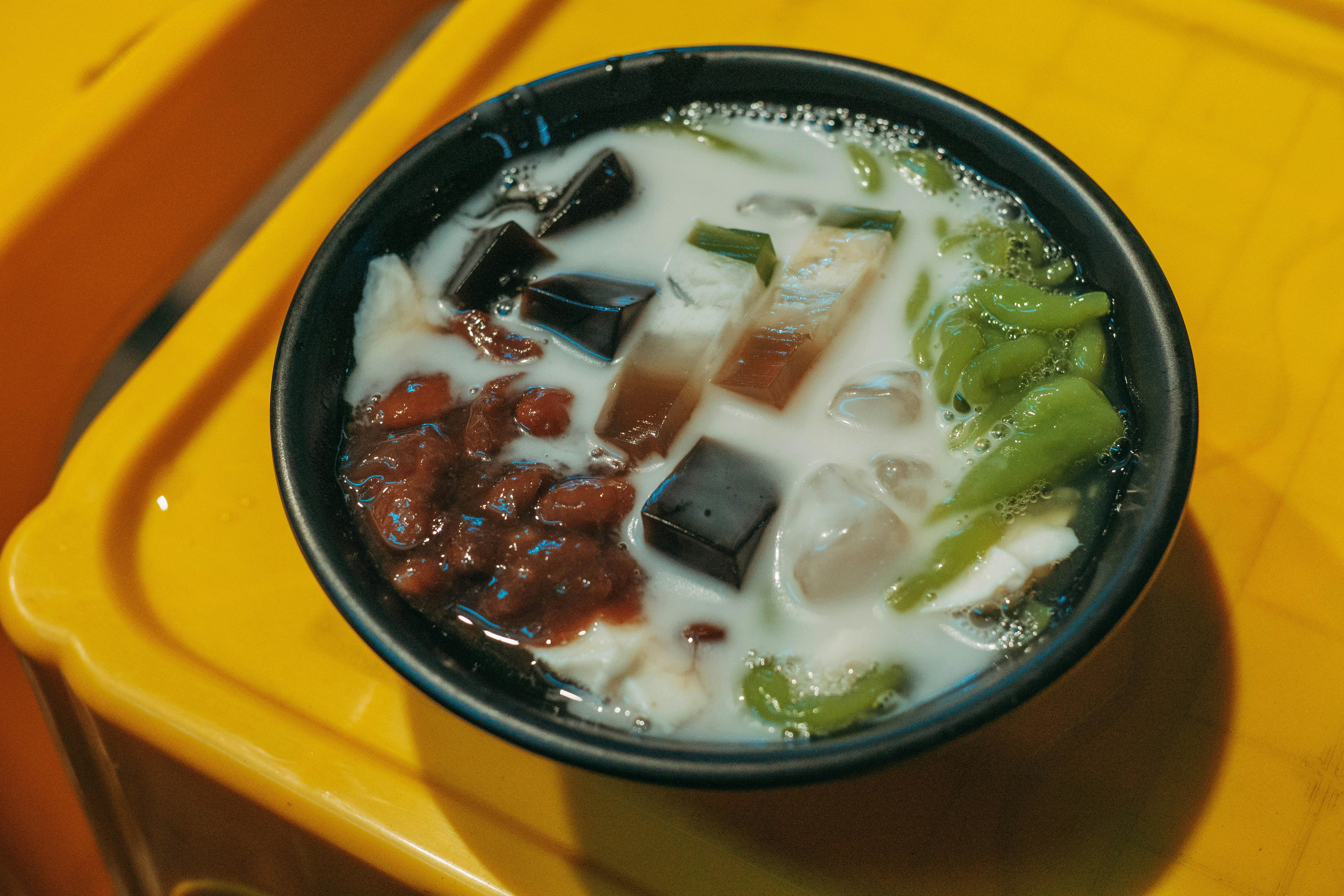
Coconut milk is the foundation, and the first name to learn is tub tim grob — "crisp rubies": water-chestnut pieces coated in tapioca, dyed a cheerful red, served in sweet coconut milk over crushed ice. Cool, chewy, crunchy, gone in two minutes. Its cousins swim in the same chilled, milky world: lod chong (green rice-flour noodles scented with pandan), bua loi (little glutinous rice dumplings, literally "floating lotus"), and ruam mit — "mixed friendship" — where the stall keeper combines a bit of everything into one bowl.
Warm coconut desserts exist too. Khanom krok, coconut-rice pancakes cooked in dimpled iron pans over charcoal, come off the street carts crisp at the edges and custardy in the middle, sometimes topped with spring onion, corn or taro. Buy them by the paper tray and eat them walking.

The golden family
If it looks like spun gold, it's Portuguese by way of Ayutthaya. Thong yip (golden drops), thong yod (golden balls), foi thong (golden threads) and sangkhaya (egg custard) all descend from egg-yolk sweets introduced centuries ago, and they still anchor celebration trays and sweet-shop windows. Rich, intensely sweet, unmistakably festive — take small amounts and strong tea.
Phuket's own sweets
The island adds its own pages to the book. O-aew is Phuket's signature shaved-ice dessert: a clear jelly made from a local fig-and-banana preparation, piled over ice with red beans or grass jelly and a sweet syrup — the thing Phuket people crave on a brutal afternoon, and hard to find done properly anywhere else. From the Hokkien tradition come the ang ku "tortoise cakes" and a shelf of Sino-Portuguese bakery sweets — mung bean cakes, flaky pastries and spiced biscuits sold in Old Town's old sweet shops, often in boxes meant for giving.
The festival and everyday sweets
Some of Phuket's best sweets only appear on a calendar. During the Vegetarian Festival, Old Town's streets fill with jay dessert stalls selling eggless cakes, sesame sweets and coconut puddings you won't see the rest of the year. Chinese New Year brings trays of ang ku and auspicious golden cakes. The everyday stalls, though, are the real archive — the same family making the same khanom krok in the same market corner for thirty years is a Phuket institution, and worth more than any novelty.
How to order like a regular
- Point at the cold bowls first. The iced coconut family is the safest, happiest entry point, and a mixed bowl usually runs about ฿30–60 at a market stall.
- Ask what's fresh off the pan. Khanom krok and other griddled sweets are a different food warm than they are an hour later.
- Small is correct. Thai desserts are built sweet and rich; two or three small things shared beat one big one.
- Sweet shops are for gifts. In Old Town, a box of local cakes is what Phuket people bring home to family — follow their lead.

None of this requires bravery. Thai dessert is gentle food — coconut, palm sugar, pandan, rice flour — and Phuket's version of it carries three cultures in every bowl. Skip dessert here and you've only eaten half the island.
Hungry for the rest of the island's table? PhuketLive.com has the full food guides, and PhuketDining.net goes dish by dish.


Comments
Post a Comment