Michelin in Phuket: The Bib Gourmand and Listed Restaurants, Explained
If you only know one thing about the Michelin Guide, you probably know the stars — and if you come to Phuket looking for them, you'll miss the island's actual story. Phuket's Michelin recognition is real and genuinely useful, but it looks almost nothing like the white-tablecloth image the word "Michelin" brings to mind. As of recent guides, Phuket has no Michelin-starred restaurants at all. What it has instead is a deep bench of Bib Gourmand awards and Michelin-selected listings, pointing at exactly the food Phuket does best: decades-old noodle shophouses, roti-and-curry breakfast institutions, crab curry cooked the Baba way, and seafood places where the fish was swimming that morning. This article explains what the badges mean, why Phuket's list is shaped the way it is, what a recognized meal costs in baht, and how to eat a "Michelin trail" day in Phuket Town. Nothing here depends on a particular year's list: names rotate in and out of the Guide annually — the types of places and how to read the badges are what stay true.

What the Michelin Guide is doing in Thailand
The Michelin Guide started in France as a tyre company's motoring handbook, and its inspectors — anonymous, trained, paying their own bills — became the most followed reviewers in fine dining. The Guide came to Thailand in the late 2010s, starting with Bangkok, and expanded to Phuket (grouped with Phang Nga, across the bridge) within a couple of years. That expansion changed what the Guide had to be. Bangkok could supply the tasting menus the inspectors grew up on. Phuket forced the Guide to take seriously a food culture that lives in shophouses, morning markets and family recipes — and to its credit, it did.
The Thailand guide is refreshed on a regular cycle, with restaurants added, kept or quietly dropped each round. Inspectors visit anonymously, and no restaurant can pay to be listed. Phuket's coverage sits inside the same national guide as Bangkok and Chiang Mai — one set of standards, applied to a ฿60 bowl of noodles and a ฿4,000 tasting menu alike. That single standard, applied honestly across price levels, is the whole value of the thing. And Michelin didn't discover Phuket food: UNESCO had already named it a Creative City of Gastronomy in 2015, the first in Thailand. The Guide arrived, looked at what locals had eaten for a century, and started pinning badges on it.
The badges, decoded: stars, Bib Gourmand, and "selected"
This is where most visitors get confused — the Guide uses several levels of recognition, and the differences are the whole point.
Michelin stars are the top award — one, two or three — for cooking of the highest quality: outstanding, worth a special journey at the upper levels. Stars are about the plate and only the plate: ingredients, technique, consistency, the chef's personality on the dish. Service and comfort don't earn them. Stars are also rare and concentrated in big-city fine dining; Thailand's live overwhelmingly in Bangkok. Phuket, as of recent guides, has none — hold that thought; the next section explains why that's a compliment in disguise.
Bib Gourmand is the badge that runs Phuket. Named after Bibendum, the Michelin Man, it's awarded for very good food at a moderate price — the Guide's way of saying "this is the smart money." Bib places get the same anonymous inspection and the same quality bar for the cooking; what they don't have is the fine-dining format. In Phuket, that means shophouse institutions, noodle shops, curry houses and seafood spots where the room is simple, the menu might be a board on the wall, and the food is the entire show. For most visitors, the Bib list is the single most useful page of the Phuket guide — it's almost exactly the places locals already rated before any inspector showed up.
Michelin-selected (the plain "listing") is the third tier: a restaurant appears in the Guide with the Michelin name attached, but no star and no Bib. It means the inspectors ate there, respected it, and recommend it as a good place of its kind. Plenty of Phuket's fine-dining rooms and modern Thai kitchens sit in this tier. A selected listing is not a consolation prize — in an island guidebook economy full of paid placements and review-farm noise, that independence is the value.
You may also see a Michelin Green Star, a separate distinction for sustainability — a conversation Phuket's resort fine-dining scene has featured in, with a celebrated restaurant at a Trisara resort known across Asia for its farm-driven, low-waste cooking.
The mental model: stars grade occasions, Bib Gourmand grades value, the plain listing grades trust. Phuket competes on the second and third — the two that decide where you'll actually eat.
Why Phuket has no stars (and why that's not a snub)
Let's deal with the zero directly. As of recent editions, no Phuket restaurant holds a star, and the island's top-end scene is small compared to Bangkok's. There are reasons — and none of them is "the food isn't good enough."
First, stars reward a specific format: a chef-driven kitchen, a tightly controlled menu, and consistency that demands big-city economics — deep staffing, imported produce on demand, a wealthy local base to fill seats on a wet low-season Tuesday. Phuket is a resort island; its serious kitchens are seasonal in a way Bangkok's aren't, and fewer rooms attempt that format. The top end exists — tasting menus on southern ingredients, chef's counters in Phuket Town, ambitious resort restaurants at Bang Tao — but it's a handful of places, not a district.
Second, and more interestingly, Phuket's genius runs the other direction. The island's great food culture is inherited, not invented by individual chefs: the Hokkien noodle shop on its third generation, the dim sum house that sells out by ten, the Baba braised-pork recipe that predates the Guide itself. Star cooking is judged partly on the chef's personal signature — and a tradition belonging to a whole community doesn't fit that frame neatly. The Bib Gourmand and selected tiers, judged on quality and value rather than auteur flair, are where that cooking gets its due. Phuket didn't fail the star test. It's playing a different sport, and on the scoreboard that matters to eaters — flavour per baht — it wins constantly.
So read the absence of stars the right way: Phuket's Michelin story is a street-food and shophouse story with a fine-dining footnote — which is precisely what makes the island's list so much fun to eat through.
The kinds of Phuket places that get recognized
Because individual names change from edition to edition, the smarter way to learn the list is by type. Phuket's recognized restaurants cluster into a few families you'll see again and again — know them, and you can find a great meal even between editions.
The long-running Phuket Town institutions. The Old Town is the island's dining room, and its oldest shophouses are the backbone of the Michelin list: roti shops frying flatbread to order for breakfast; dim sum houses where bamboo baskets circulate from dawn; noodle shops built around a single bowl perfected over generations. The rooms are marble tables, ceiling fans and family photos. The cooking is Hokkien, Baba and Cantonese-influenced — the flavours of the tin-mining era, when Phuket Town was rich long before the beach resorts existed.
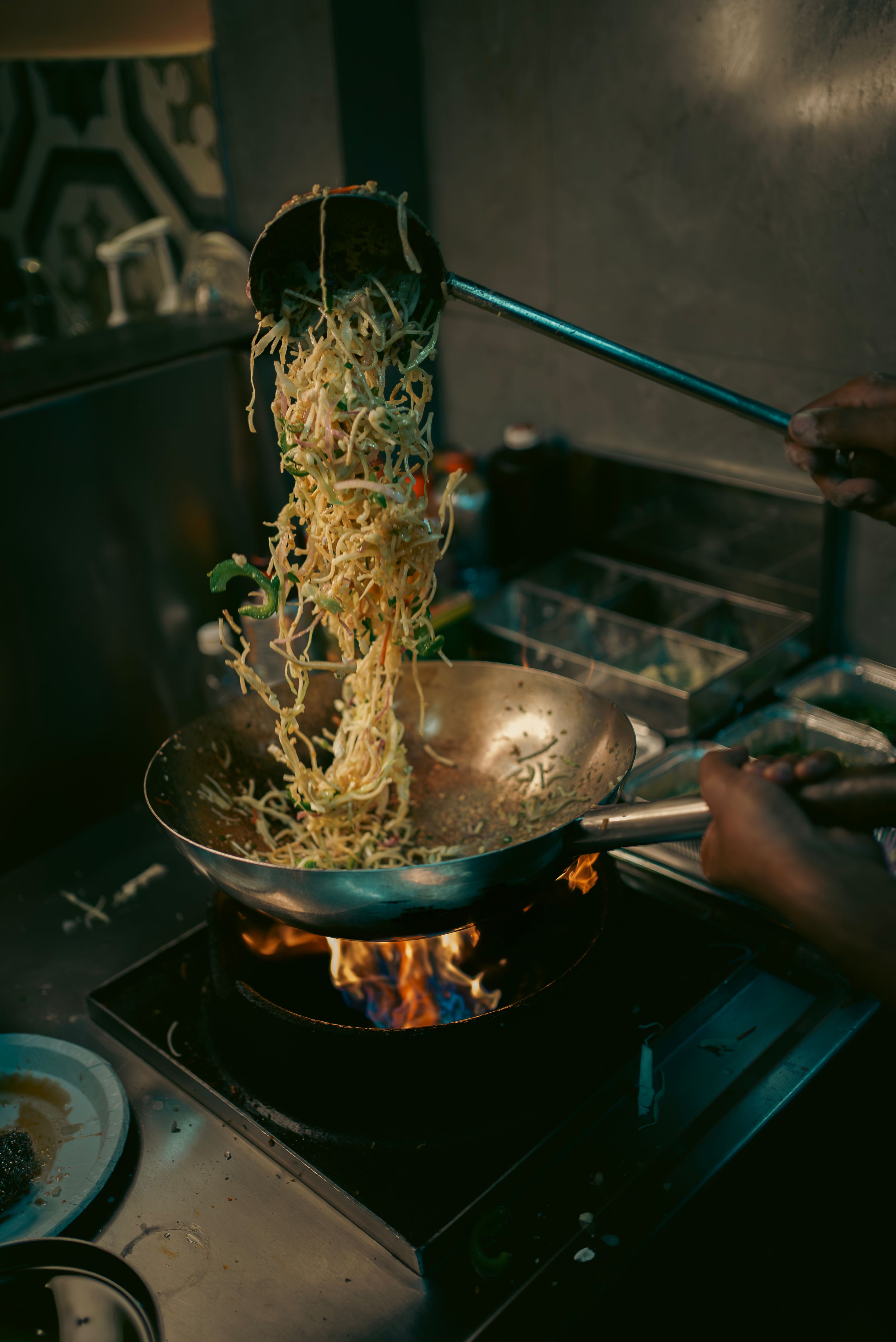
The famous noodle and curry shops. Phuket's signature dishes keep showing up in the Guide because they're the strongest argument for the island's way of eating. Hokkien mee — yellow noodles stir-fried in a dark, rich broth with seafood and a soft egg — is the emblematic bowl. Khanom jeen, fermented rice noodles with curry ladled over at breakfast, is another favourite, along with crab curry with betel leaf (gaeng pu bai cha plu) and the gentle Baba classic moo hong, pork belly braised dark and sweet. A listing tends to find the shop that does one of these definitively.
The seafood names. The Guide's Phuket pages reflect an island: seafood restaurants where the catch is priced by weight and cooked to order — grilled, steamed with lime, garlic and pepper — respecting fish landed hours earlier. Around Rawai, the fishing village in the south, the ritual is the experience: buy the catch at the market stalls, have it cooked across the road. One of the great food experiences in Thailand, at any badge level.
The small fine-dining scene. Finally, the footnote that keeps growing: a compact set of serious dining rooms — modern southern Thai kitchens in converted Town shophouses, chef's counters, resort restaurants up the west coast — where Phuket's ingredients get the tasting-menu treatment: local crab, southern herbs, rice from named farms, real technique. These carry the selected listings (and the Green Star conversation), and they're where to book when you want the island's produce treated like luxury goods — because here, it is.
Notice what's missing from those families: the beachfront international row. The Guide's Phuket is overwhelmingly a Phuket Town story. That's the first practical lesson — to eat the Michelin version of the island, you leave the beach for a day. It's a short taxi ride, and it's worth it.
What Bib Gourmand value actually means in baht
The Bib Gourmand is defined by value, so let's put numbers on it — hedged, because prices drift, but honest.
At a Phuket shophouse with a Bib or a listing, a signature dish typically runs about ฿60–150 — a bowl of Hokkien mee, a plate at a rice-and-curry counter, roti with curry and a sweet tea. A full, generous meal for one at most recognized casual places — a couple of dishes, rice, a drink — commonly lands around ฿150–400. A seafood meal at a recognized place, ordering by weight with two or three cooked dishes for the table, might run ฿400–900 a person depending on how much crab is involved. Two people can eat a famous, Guide-backed lunch for less than one beachfront cocktail round costs on the tourist strip.
The selected fine-dining rooms are a different budget line: tasting menus generally start around ฿1,800–2,500 a head before drinks — real money, but a fraction of an equivalent seat in Bangkok or Singapore, priced against ingredients that mostly grew or swam within an hour of the kitchen.
The takeaway: in Phuket, the badge-to-baht ratio peaks at the bottom of the ladder. Nowhere else in the Michelin world can you eat this many recognized places in a single day, on foot, for the price of one mediocre resort dinner. Which brings us to the best way to use the list.
A self-guided Michelin trail day in Phuket Town
You don't need a tour or a driver: just one day based in the Old Town, eating the way the inspectors must have. The Town is compact and walkable in the cool hours, and the recognized places cluster within a few streets around Thalang, Dibuk, Phang Nga and Yaowarat roads.
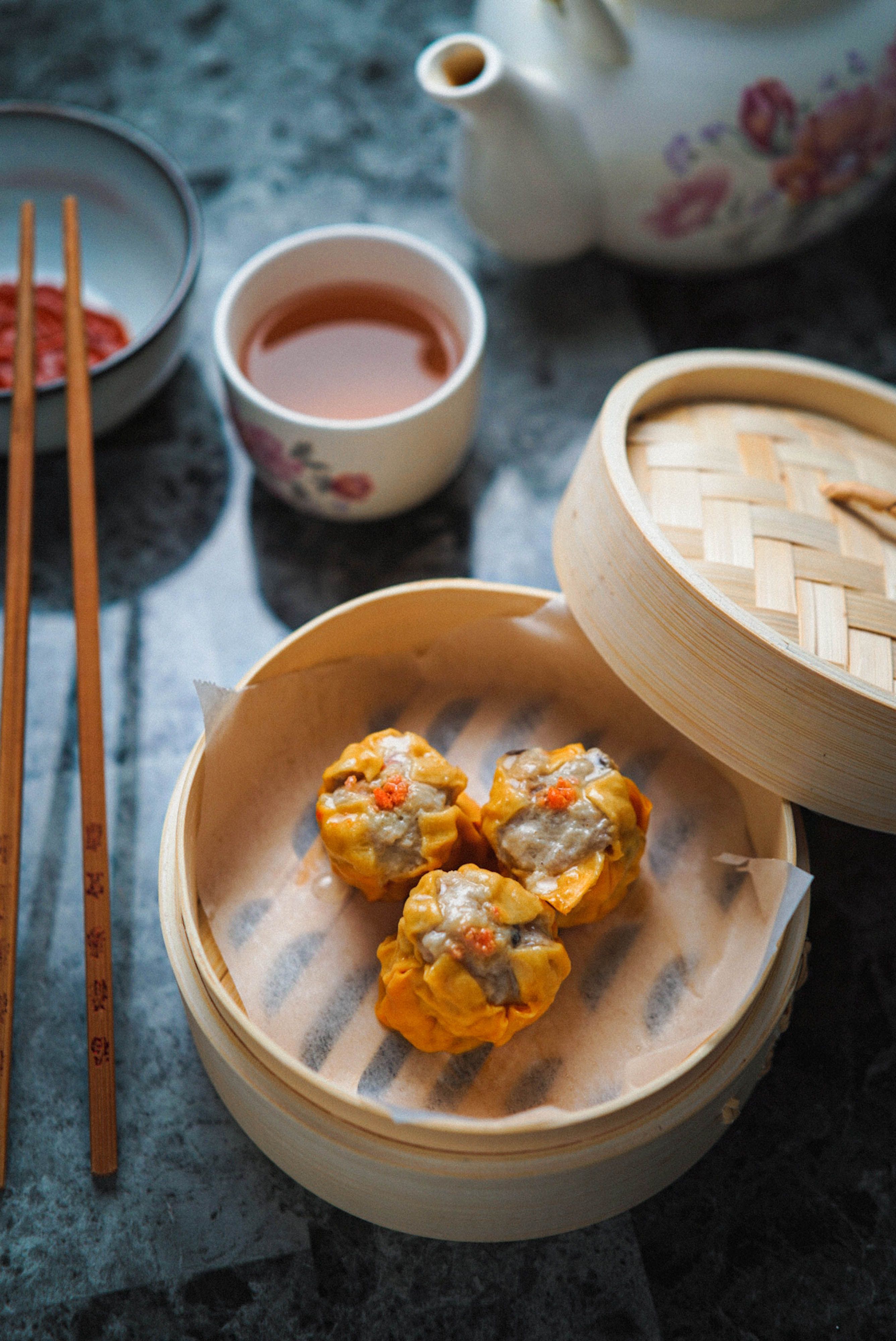
Start early — roti and dim sum (7–9 AM). Phuket's morning food culture is Hokkien-Chinese and it does not wait for late risers. Begin with roti and curry at one of the Town's famous breakfast shops — crisp flatbread, a small bowl of chicken or beef curry, sweet tea — or do the dim sum circuit instead, where baskets arrive in rounds and you point at what looks good. Either way, breakfast is small, cheap and social, in rooms full of Phuket families starting their day.
Mid-morning — walk it off in the Old Town. The Sino-Portuguese shophouses on Thalang Road, the shrines, the old coffee shops (kopi culture is its own ritual — thick coffee, condensed milk, soft-boiled eggs) — the digestive break that makes the day work, in genuinely the prettiest part of Phuket.
Lunch — the signature bowl (noonish). This is the Hokkien mee slot, or khanom jeen if you missed it at breakfast, or the crab curry if you've found the right house. Lunch is the main event at most Town institutions — several famous ones close by mid-afternoon or when the pot runs out, which is why the trail is front-loaded. Order the signature, plus one thing you're unsure about. And remember southern heat is real: a mild Baba dish alongside the fiery one is not cowardice, it's architecture.
Afternoon — sweets and a pause. Baba bakeries and sweet shops, a shaved ice, then get out of the heat.
Evening — one rung up (7 PM onwards). Finish with either a recognized seafood dinner (Rawai is a drive south — the day's one taxi decision) or a sit-down Town restaurant doing the grown-up versions of what you ate all day. One dinner reservation, booked a day or two ahead in high season, is the only admin the whole trail requires.
Total damage: commonly around ฿800–1,500 a person including the good dinner — and you've eaten across more recognized kitchens in twelve hours than most people manage in a year of city breaks. That's the Bib Gourmand's real gift: it turned Phuket Town into a tasting menu you walk.

The honest caveats
A guide that only sells the dream isn't a guide — so here's the fine print, stated plainly.
Listings change. The Guide re-inspects and republishes on its own cycle. Places open, close, move, change hands and change cooks; awards are won and quietly lost. Any specific list of names ages faster than the food does. Treat the current edition as a snapshot and this article's types and neighbourhoods as the durable map. If a famous name has a queue out the door and a new laminated menu in six languages, trust your eyes over the badge it won three years ago.
A listing is a signal, not a guarantee. It means inspectors had good meals there, more than once, under a consistent standard. It does not mean your meal on a rainy low-season Tuesday, with the second cook on duty, will be the best of your trip. These are mostly tiny family operations, with off days and signatures sold out by 1 PM. Go for the signature dish, go early, and judge the place by its own type — the right question is "is this a great noodle shop," not "is this the best meal of my life."
Success changes places. A badge reliably brings queues, tour groups and imitators, and some famous spots strain under their fame — longer waits, bigger rooms, a little less magic per bowl. The trail strategy handles most of this (eat early), and the deep bench of listed places means there's always a second excellent option two streets away. The locals' move, as ever: the place full of Phuket families beats the place full of people photographing their food.
Michelin is one lens, not the island. The list overlaps with Phuket's best eating; it doesn't contain it. Use the Guide as a starting map — then go off it confidently. Some of your best Phuket meals will be at places no guide has found yet. That's the island working as intended.

The bottom line
Michelin in Phuket is not about stars, and once you stop looking for them the island's list becomes the most useful food document a visitor can carry: a vetted, unpaid map of the shophouses, noodle shops and seafood houses Phuket's own people built their food culture on — plus a small, serious fine-dining scene for the one night you want the tablecloth. Learn the badges, spend your baht at the Bib Gourmand end, and walk the Old Town trail. The inspectors did the homework. All you have to do is be hungry at the right hours.
More Phuket food guides — the full eating ladder, night markets, seafood and breakfast culture — live at PhuketLive.com, alongside beaches, boating, golf and nightlife.


Comments
Post a Comment